Economic Growth Remains Strong Despite Hiring Freeze
The United States economy continues to post solid growth figures, yet the labor market is sending unusually mixed signals. While output has expanded at a healthy pace, hiring activity has slowed significantly, leaving economists puzzled by the divergence between macroeconomic strength and employment momentum.
Historically, robust economic expansion has been accompanied by strong job creation, making the current environment particularly difficult to interpret. The disconnect suggests that traditional indicators may no longer fully capture the structural forces reshaping the modern workforce.
Goldman Sachs Warns of Emerging “Jobless Growth”
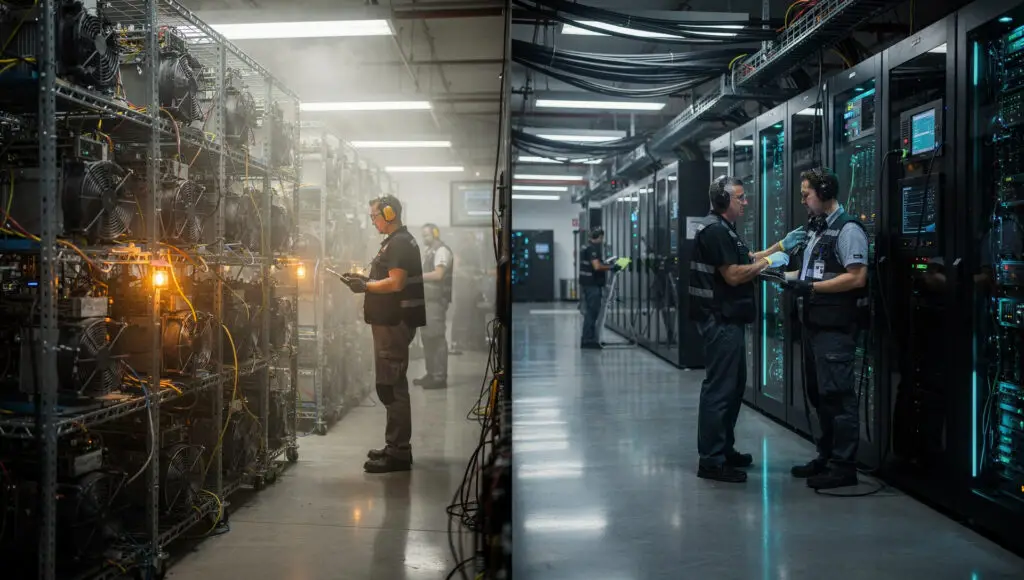
A widely cited report from Goldman Sachs warned that the US could be entering a phase of “jobless growth,” where companies increase productivity without proportionally expanding their payrolls. Advances in artificial intelligence and automation are allowing firms to operate more efficiently, reducing the urgency to hire.
Such transformations are not unprecedented, but the speed at which AI is being integrated into business operations has intensified the debate. Economists are now questioning whether technological acceleration could permanently alter the relationship between growth and employment.

Workers Encounter a Tougher Job Market
For many Americans, the slowdown is more than a statistical anomaly—it is a lived experience. Job seekers report submitting hundreds, sometimes thousands, of applications with limited success, even when they possess strong credentials and professional experience.
This shift has created a psychological toll alongside financial strain. Extended job searches can erode confidence and spending power, potentially feeding back into the broader economy if consumer demand weakens.
Recommended Article: Global Trust in the US Erodes as Trump’s Policies Reshape…
Artificial Intelligence Reshapes Corporate Strategy
Companies across industries are investing heavily in AI-driven tools capable of handling tasks once performed by large teams. From customer service automation to advanced data analysis, technology is enabling organizations to scale output without matching increases in headcount.
Executives often frame these investments as necessary to remain competitive in a rapidly digitizing economy. However, the efficiency gains raise important questions about how displaced workers will transition into emerging roles.
Immigration Policy Alters Labor Supply Dynamics
Changes in immigration policy under The White House have also influenced labor market conditions by slowing population growth. A smaller influx of workers can tighten labor supply, yet it may simultaneously reduce the number of jobs required to maintain stable unemployment rates.
This dynamic complicates economic interpretation. Lower hiring does not automatically signal weak demand; it may instead reflect a recalibration of workforce needs in response to demographic shifts.
Corporate Caution Limits New Hiring
Beyond technology and demographics, corporate sentiment has played a significant role in restraining recruitment. Businesses navigating uncertain fiscal policy, shifting trade conditions, and fluctuating borrowing costs often prefer to maximize productivity from existing staff rather than expand payroll commitments.
Such caution is typical during transitional economic periods. Firms aim to preserve flexibility until they gain greater clarity about future demand and regulatory environments.
Federal Reserve Policy Looms Large
Monetary policy from the Federal Reserve remains a central variable influencing corporate behavior. Higher interest rates increase financing costs, prompting many organizations to delay expansion plans, including workforce growth.
At the same time, policymakers must balance inflation control against the risk of dampening employment. Their decisions will likely shape whether the hiring slowdown proves temporary or more deeply entrenched.
Economists Debate Whether the Trend Will Last
Some analysts argue that the current environment represents a short-term adjustment following pandemic-era hiring surges. Others believe the economy is undergoing a structural transition comparable to past technological revolutions that permanently redefined labor demand.
If history is any guide, such shifts can take years to stabilize. During that time, workers and employers alike must adapt to evolving expectations about skills and productivity.
Consumer Spending Adds Another Layer of Risk
The economy has become increasingly reliant on spending from higher-income households, a pattern that introduces new vulnerabilities. Should financial markets experience a sharp correction, affluent consumers may pull back, weakening one of the pillars supporting growth.
A downturn in spending could quickly translate into reduced business confidence, further discouraging hiring and reinforcing the cycle of cautious expansion.
Outlook Hinges on Adaptation and Policy Choices
Despite present uncertainty, many economists remain cautiously optimistic that the labor market will eventually regain balance. Emerging industries could generate new categories of employment, particularly if investment in innovation continues.
Still, the path forward depends heavily on policy decisions, corporate strategy, and the pace of technological adoption. Whether the US is witnessing a temporary anomaly or the dawn of a jobless-growth era may become one of the defining economic questions of the decade.