


Elena Chen, a blockchain builder and DeFi security reviewer who focuses on blockchain data and system design, sees recent company buying as a major change in how money is used with digital assets that have limited supply. In our analysis of how money moves in blockchain markets, ongoing buying by large investors turns company funds into bitcoin that is held for the long term, reducing the amount available to trade. This creates a cycle where stock markets and blockchain networks become more connected, shaping how large investors use and manage their money.
Bitcoin Buying by Strategy Highlights Growing Market Adoption
Strategy’s latest $449M Bitcoin purchase reinforces a broader trend in global markets, where corporate balance sheets are being used as vehicles for macro positioning in digital assets. Based on public disclosures from Strategy and market data, this accumulation strategy is no longer an isolated case but a signal of growing institutional conviction.
Why is Strategy continuing to accumulate bitcoin aggressively?
The latest acquisition reflects a consistent long-term thesis that bitcoin remains undervalued relative to global monetary trends and fiat currency dynamics.
In our observation of disclosed activity:
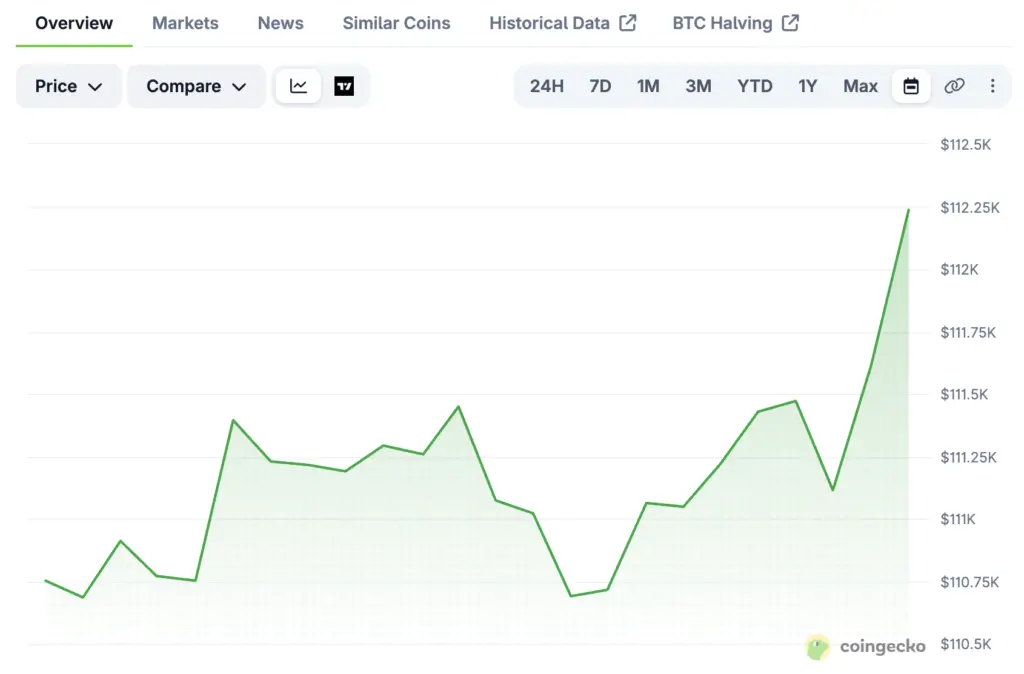
- The company added over 4,000 BTC at an average price exceeding $110,000
- Total holdings now exceed 600,000 BTC based on recent corporate filings
- Accumulation continues despite substantial unrealized gains
This behavior reflects conviction-driven accumulation rather than short-term trading activity.
Core drivers behind continued buying:
- Long-term hedge against fiat currency debasement
- Institutional positioning ahead of broader adoption cycles
- Confidence in bitcoin’s fixed-supply monetary structure
- Strategic use of capital markets to scale exposure
How is Strategy financing its bitcoin purchases?
Unlike normal asset buying, Strategy is using financial markets with a multi-step funding setup to keep turning stocks and other financial tools into bitcoin investments.
In our evaluation of capital structure:
- Equity issuance through common stock (MSTR) remains a primary funding source
- Preferred share structures (STRK, STRF, STRD) introduce varying risk-return profiles
- At-the-market (ATM) programs allow incremental capital raising aligned with market conditions
Capital structure characteristics:
- STRK: Convertible instrument offering equity upside with moderate yield
- STRF: More conservative structure with cumulative dividend features
- STRD: Higher-risk, non-convertible structure with elevated yield
This multi-instrument approach enables ongoing capital recycling into bitcoin accumulation.
What does this trend mean for global crypto and capital flows?
Companies buying more bitcoin is changing how large investors around the world view it as a type of investment.
In our analysis of global market dynamics:
- Public disclosures indicate a growing number of companies holding bitcoin as a treasury asset
- Capital markets are increasingly being used to fund crypto exposure
- As more large investors join in, bitcoin is moving from short-term, high-risk trading to a more long-term investment.
This creates a structural feedback loop:
- Increased institutional buying reduces circulating supply
- Supply constraints contribute to upward price pressure
- Rising prices attract additional corporate participation
Global transmission effects:
- Bitcoin evolves toward a quasi-reserve asset for corporations
- Equity markets become indirect exposure channels to digital assets
- Liquidity flows increasingly bridge traditional finance and blockchain ecosystems
- Market volatility may increase as leverage enters the system
Corporate Bitcoin Accumulation and Market Impact Framework
Based on corporate disclosures, on-chain supply dynamics, and observed market behavior, the following framework summarizes the structural impact of sustained accumulation.
| Indicator | Current Signal | Market Impact (Global Crypto) |
|---|---|---|
| Corporate BTC Holdings | Expanding | Reduced circulating supply |
| Strategy Accumulation | Aggressive | Price support and momentum |
| Funding via Equity | Increasing | Dilution vs bitcoin exposure tradeoff |
| Institutional Adoption | Growing | Legitimization of bitcoin |
| BTC Supply Concentration | Rising | Potential liquidity constraints |
| Market Valuation (mNAV) | Fluctuating | Investor scrutiny on sustainability |
What risks exist in this accumulation strategy?
Despite strong conviction, the strategy carries meaningful financial and structural risks.
In our assessment:
- The company trades at a premium relative to its bitcoin net asset value
- Continuous equity issuance introduces dilution concerns
- High concentration in a single asset increases volatility exposure
Public statements from Michael Saylor have acknowledged that extreme downside scenarios, including significant bitcoin price declines, would materially impact shareholder value.
Key risks investors are monitoring:
- Sustainability of valuation premiums
- Market tolerance for ongoing capital raises
- Volatility associated with leveraged bitcoin exposure
Why do some investors remain skeptical?
The scale and structure of the strategy raise questions about long-term viability and governance.
In our view, skepticism is driven by:
- Uncertainty around evolving capital allocation strategies
- Concerns about issuing equity below intrinsic valuation thresholds
- Ongoing governance and legal scrutiny tied to prior investor concerns
These factors indicate that while institutional conviction is increasing, market trust is still being established.
Is this the beginning of a corporate bitcoin accumulation cycle?
Available data suggests that competition among firms is intensifying, with more companies exploring bitcoin as part of treasury strategy.
We observed that:
- Multiple firms are adopting bitcoin treasury frameworks
- Accumulation is becoming a differentiating factor in capital allocation strategy
- Companies are structuring exposure based on varying risk tolerances
This indicates a transition where bitcoin becomes not just an investment, but a strategic component of corporate identity.
How should global investors interpret this shift?
In our analysis, Strategy’s approach represents a leading indicator of broader institutional behavior rather than an isolated case.
Investors are increasingly:
- Treating bitcoin exposure as part of diversified equity strategy
- Monitoring corporate accumulation as a key driver of price dynamics
- Evaluating balance sheet risk alongside digital asset upside
The structural shift is clear: Bitcoin is moving from the margins of finance toward integration within institutional capital allocation frameworks, with corporate balance sheets playing a central role in shaping its long-term market dynamics.