Bitcoin Trades Below Record High After 2025 Peak
Bitcoin has traded within a broad range in recent weeks after falling from its 2025 record high. The cryptocurrency previously reached a peak of approximately $126,000 before entering a period of consolidation.
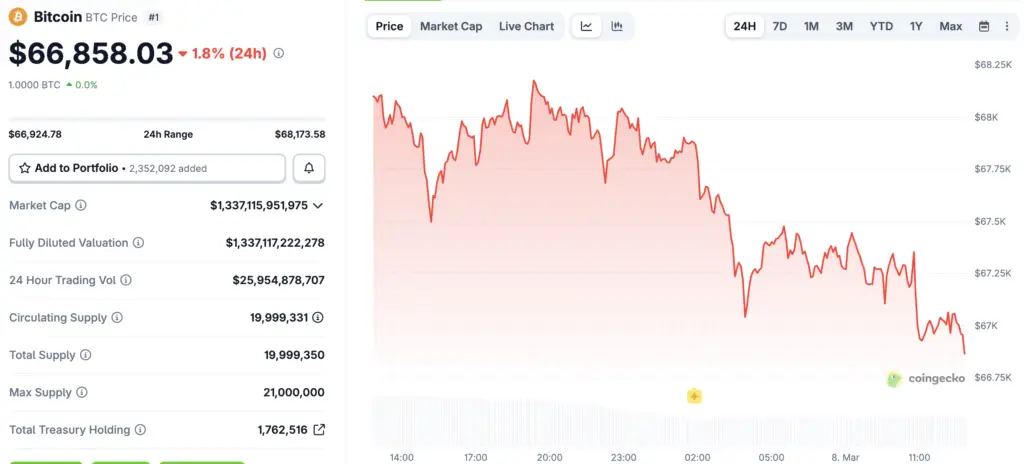
By early March 2026, Bitcoin was trading near the $67,000 level. That price represents a decline of roughly forty-six percent from its previous all-time high.
Analysts Debate Whether Current Cycle Is Bear Market
Some analysts believe Bitcoin’s current performance reflects the beginning of a broader bear market cycle. Historically, the cryptocurrency has experienced drawdowns exceeding seventy percent after reaching major peaks.
However, others argue that the present correction remains relatively moderate compared with previous cycles. Structural changes in the market may reduce the severity of traditional downturn patterns.
Artificial Intelligence Models Evaluate Price Outlook
Researchers recently asked nine prominent artificial intelligence systems to forecast Bitcoin’s future price trajectory. Models included Grok, Claude, Qwen, ChatGPT, Mistral, Venice AI, and several other advanced systems.
Each AI model was prompted to estimate whether Bitcoin might fall below $60,000 before reclaiming the $100,000 level. The systems also provided reasoning based on market structure and macroeconomic trends.
Some Models Predict Temporary Drop Below $60K
Several AI forecasts suggested Bitcoin could briefly decline below $60,000 before beginning a recovery. Analysts often view this type of drop as a final market capitulation before a larger rally.
Technical patterns currently show Bitcoin consolidating within a wide range between roughly $60,000 and $72,000. A break below the lower support level could trigger a deeper but temporary decline.
Institutional Adoption Changes Market Structure
Many forecasts emphasize the growing role of institutional investors in cryptocurrency markets. Spot Bitcoin exchange-traded funds now hold a substantial portion of the circulating supply.
Institutional participation has increased liquidity and long-term investment interest in digital assets. These developments may influence how future market cycles unfold.
Post-Halving Supply Dynamics Support Recovery
Bitcoin’s recent halving event remains another important factor influencing price predictions. The halving reduces the rate at which new coins enter circulation, tightening available supply.
Historically, similar events have preceded major bull markets within the cryptocurrency sector. Analysts therefore continue monitoring whether reduced supply will eventually trigger renewed price momentum.
Majority Expect Bitcoin to Reclaim $100K
Despite differences in short-term forecasts, most AI models expect Bitcoin to return above $100,000. Predictions commonly place this milestone sometime between late 2026 and early 2027.
Market observers believe macroeconomic conditions will play a major role in determining the timeline. Liquidity conditions, institutional demand, and regulatory developments could shape Bitcoin’s next major rally.