


Bitcoin’s Early Rally Fails to Hold
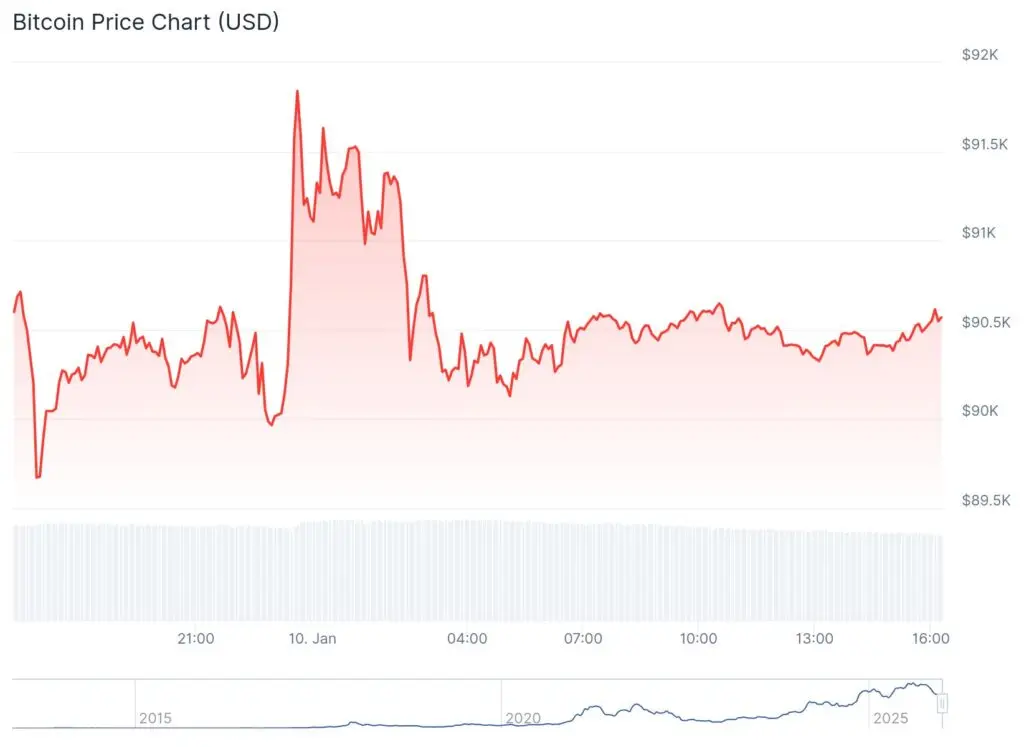
Bitcoin attempted a rebound during early US trading hours, briefly climbing above the $92,000 level before momentum faded. As the session progressed, selling pressure gradually pushed prices lower, erasing most of the gains. By late afternoon, Bitcoin was trading near $90,000, marking a modest but notable pullback.
The move reinforced a recent pattern where upside attempts struggle to sustain traction. Traders appear increasingly cautious, preferring to lock in profits rather than chase short-term rallies.
Crypto Lags Broader Risk Assets
Bitcoin’s decline contrasted sharply with strength across traditional markets. US equities posted solid gains, with major indices advancing as investors responded positively to corporate earnings expectations. Commodities also rallied, led by precious metals and energy prices.
This divergence highlights Bitcoin’s growing sensitivity to macroeconomic uncertainty. While often grouped with risk assets, crypto is currently responding more directly to policy ambiguity and data-driven volatility.
Mixed Employment Data Complicates Outlook
Friday’s US employment report offered conflicting signals. Job creation in December totaled just 50,000 positions, undershooting forecasts and pointing to slowing labor demand. Downward revisions to previous months further amplified concerns that economic momentum weakened toward the end of 2025.
However, the unemployment rate edged lower, creating a mixed picture. This combination left markets uncertain about whether softer hiring reflects cooling growth or structural labor shifts.
Recommended Article: Venezuela May Hold a Hidden Bitcoin Stockpile as Regime Change Raises Market Questions
Inflation Expectations Edge Higher
Consumer sentiment data added another layer of complexity. Short-term inflation expectations rose slightly, suggesting households remain wary of persistent price pressures. While overall sentiment improved modestly, inflation concerns continue to influence spending and investment decisions.
Political polarization also played a role, with expectations diverging sharply across demographic groups. This variability reduces the usefulness of sentiment data as a clear policy signal.
Supreme Court Silence Fuels Policy Uncertainty
Markets were also watching for a Supreme Court decision on the Trump administration’s tariff framework. The absence of a ruling prolonged uncertainty around trade policy and its potential inflationary impact.
With additional decisions expected in the coming days, investors are hesitant to make aggressive bets. The lack of clarity continues to weigh on assets sensitive to policy risk, including cryptocurrencies.
Crypto Stocks Reflect Cautious Sentiment
Crypto-related equities largely mirrored Bitcoin’s weakness. Major exchanges and investment vehicles posted declines as speculative interest softened. Reduced trading volumes and cautious positioning contributed to the pullback.
An exception emerged among mining firms that have diversified into artificial intelligence infrastructure. These companies attracted interest due to their exposure to multiple growth themes.
Near-Term Outlook Remains Defensive
Bitcoin’s inability to sustain rallies suggests traders remain defensive heading into the new year. Until clearer signals emerge on growth, inflation, and policy direction, price action is likely to remain range-bound.
Volatility may persist as markets digest incoming data and await policy clarity. For now, Bitcoin appears caught between long-term optimism and short-term caution.