Dr. Amara Okafor, a former World Bank economist specializing in emerging market stability and global demand cycles, evaluates China’s policy shifts through a macro-to-micro framework grounded in fiscal transmission and household behavior. With years of experience analyzing consumption-driven transitions across developing economies, she views China’s domestic demand push as a structural recalibration with both short-term growth benefits and long-term balance sheet risks.
China Shifts Focus to Domestic Consumption for 2026 Growth
China is doubling down on domestic demand, signaling that growth in 2026 will rely less on exports and more on internal consumption, credit expansion, and private sector recovery.
In our analysis of the current market, the policy direction led by Premier Li Qiang reflects a deliberate structural pivot: Beijing is actively rebalancing its economic model toward consumption-led growth as external conditions become less reliable.
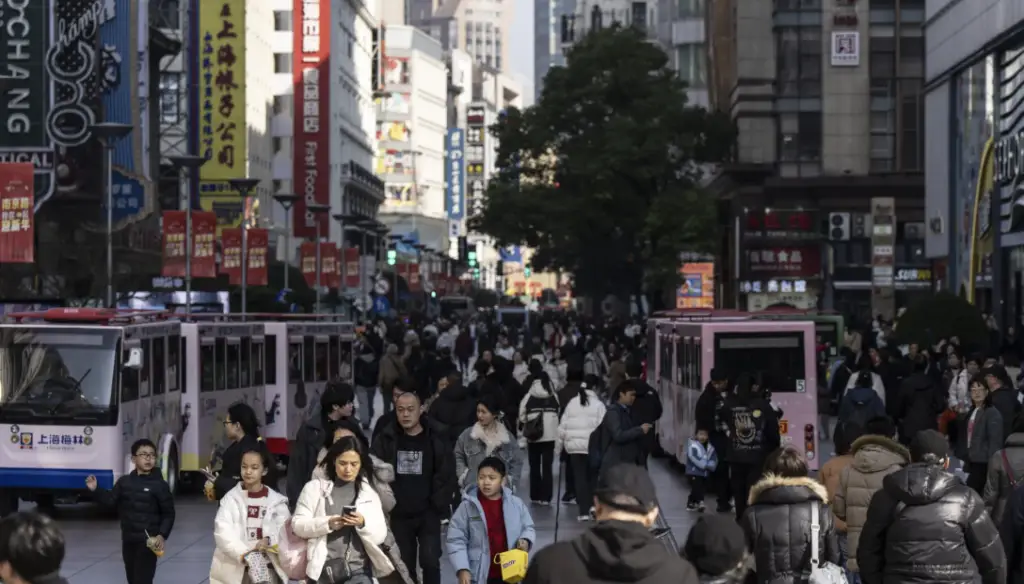
Image source: Bloomberg
Why is China focusing on domestic demand now?
External conditions are weakening as a stable growth engine.
We observed that:
- Global trade remains volatile amid geopolitical tensions and supply chain realignment
- Export-driven growth is facing structural headwinds, particularly in developed markets
- Domestic consumption has lagged behind pre-pandemic trends
According to the International Monetary Fund, China’s growth model requires stronger internal demand to maintain sustainable expansion as global trade decelerates.
This shift signals that domestic demand must now carry a larger share of economic growth.
Core policy objectives:
- Stimulate household spending
- Support private sector investment
- Stabilize economic momentum in early 2026
How will these policies affect regional and global markets?
China’s policy pivot has immediate spillover effects across global markets.
In our analysis:
- Stronger domestic consumption could increase intra-Asian trade flows
- Commodity demand may rise alongside infrastructure and consumer activity
- Currency markets, including the yuan, may stabilize with improved growth expectations
Data from the National Bureau of Statistics of China shows gradual recovery in retail sales, with growth trending in the 4–6% range, indicating early signs of demand stabilization.
For global investors, China’s stimulus acts as a demand anchor in an otherwise uncertain macro environment.
Market transmission effects:
- Increased demand for consumer goods and services
- Rising capital flows into China-linked equities and sectors
- Partial stabilization of Asian supply chains
- Spillover benefits to emerging markets dependent on Chinese demand
What specific measures is China introducing?
The policy package combines fiscal expansion and financial easing tools.
We observed that the State Council of the People’s Republic of China and the People’s Bank of China are coordinating to:
- Expand loan support for service-oriented businesses
- Introduce interest subsidies for consumer lending
- Increase availability of high-quality domestic services
- Encourage private capital participation through targeted incentives
These measures aim to lower borrowing costs while increasing spending capacity across households and businesses.
China Domestic Demand Policy Impact
| Indicator | Current Signal | Market Impact (China & Global) |
|---|---|---|
| Consumer Spending | Recovering (~4–6%) | Boost to retail and services |
| Loan Support | Expanding | Increased credit access |
| Private Investment | Encouraged | Stronger capital participation |
| Interest Subsidies | Increasing | Lower financing costs |
| GDP Growth Target | ~5% | Stabilized expectations |
| Debt Levels | ~290–300% of GDP | Long-term stability risk |
How is China supporting businesses and investment?
Policy support extends beyond consumers to reinforce production capacity.
We observed that:
- Small and medium enterprises are receiving subsidized credit access
- Risk-sharing mechanisms are being introduced to support private bond issuance
- Equipment upgrade financing is becoming more accessible
This dual-track approach supports both consumption and production, improving overall economic resilience.
Why is private sector support critical?
Private investment remains central to employment and innovation.
In our evaluation:
- Private firms account for a large share of urban employment and technological development
- Financing constraints have limited expansion in recent years
- Policy support aims to restore confidence and unlock capital deployment
This indicates a shift toward rebalancing growth through market-driven participation rather than purely state-led investment.
What role do subsidies play in this strategy?
Subsidies are being deployed to accelerate short-term demand recovery.
We observed that:
- Consumer trade-in programs are boosting purchases of appliances and vehicles
- Interest subsidies are reducing borrowing costs for households
- Incentives are designed to bring forward consumption decisions
These tools function as demand catalysts, helping bridge the gap between policy intent and real economic activity.
How does this affect global supply chains?
China’s domestic demand expansion has significant global implications.
In our assessment:
- Increased consumption will likely drive higher imports of raw materials and intermediate goods
- Regional suppliers across Asia may benefit from stronger Chinese demand
- Supply chains may gradually rebalance toward domestic consumption rather than export dependency
This reinforces China’s role as a central node in global trade networks.
However, some economists argue that consumption alone may not fully offset structural weaknesses in the property sector and export markets, highlighting the limits of demand-side stimulus.
What risks remain despite the policy push?
Stimulus measures introduce both opportunities and structural risks.
Key Structural Risks:
- Debt levels approaching 300% of GDP may constrain long-term financial stability
- Consumer confidence recovery may lag despite policy support
- Policy transmission may weaken if credit demand remains subdued
- External geopolitical risks continue to affect trade and investment flows
These risks highlight the need for careful calibration of fiscal and monetary tools.
What should investors watch next?
Policy effectiveness will be reflected in key macro indicators.
In our analysis, focus on:
- Retail sales growth and household consumption trends
- Credit expansion and loan uptake across sectors
- Private investment recovery and capital formation
- Currency stability and cross-border capital flows
These indicators will determine whether domestic demand becomes a sustainable growth driver.
What is the broader takeaway for global markets?
China is undergoing a structural transformation in its growth model.
In our view:
- The shift toward domestic demand is strategic and long-term, not cyclical
- Policy coordination between fiscal authorities and the People’s Bank of China is increasing
- Global markets will become more sensitive to China’s internal consumption cycle
The implication is clear: China’s economic trajectory in 2026 will be defined not by export performance alone, but by how effectively it can stimulate, sustain, and balance domestic demand against rising structural constraints.