

SHANGHAI — November 17, 2025 — China has announced an ambitious national goal to double its middle-income population to 800 million people within the next decade, signaling a decisive policy shift toward human-capital investment and sustainable consumption growth.
The initiative, unveiled through recent government briefings, marks a strategic effort to transform China’s economic model from asset-driven expansion to people-centered development, placing education, healthcare, and social protection at the heart of future policy.
Expanding The Middle-Income Cohort
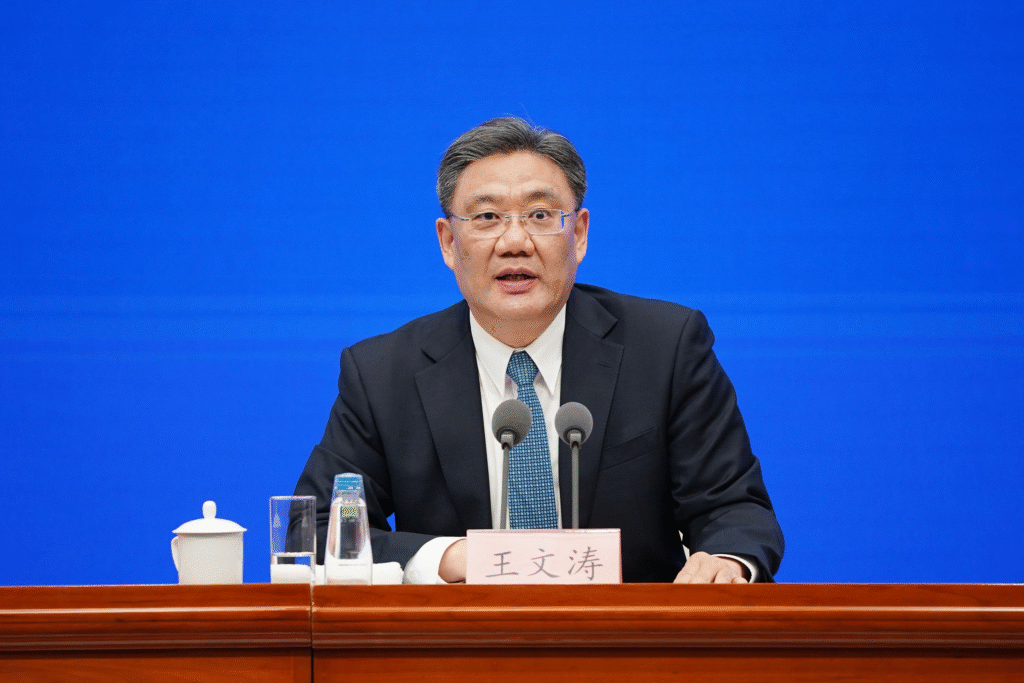
According to Commerce Minister Wang Wentao, China’s current middle-income group exceeds 400 million citizens. Over the next ten years, Beijing aims to nearly double that figure by increasing household earnings, improving job stability, and expanding access to essential services.
The plan forms part of the next Five-Year Program, which calls for deeper investment in education, social welfare, and senior care. Officials describe the initiative as creating an “olive-shaped” income structure, with a broad, resilient middle class supporting balanced national growth.
Investing More In Human Capital
China’s Central Committee emphasized that the country must now “invest more in people,” replacing decades of reliance on infrastructure spending with programs that build long-term skills and security.
A guide to the plan issued by Xuexi Publishing House stated: “Boosting funding for education, healthcare, and senior care is essential to safeguard and improve livelihoods, achieve high-quality living, and promote prosperity for all.”
Recommended Article: Thai Economy Suffers Steepest Contraction Since 2021 As Growth Fades
Linking Human Investment To Economic Growth
Economists say the initiative could create a virtuous cycle of higher productivity and stronger domestic demand. Professor Yang Tianyu of Renmin University noted that as workers’ skills improve, wages rise and consumer spending expands, reinforcing growth and stability.
“When the middle-income group expands, it means human-capital investments are paying off,” Yang said. “This reinforces national competitiveness and long-term prosperity.”
Defining The Middle-Income Bracket
China’s National Development and Reform Commission previously defined middle-income families as those earning between 100,000 and 500,000 yuan annually for a household of three. These families typically enjoy stable employment, access to quality education, and discretionary spending power across housing, travel, and healthcare.
The last official estimate placed roughly 140 million households within this range, equivalent to more than 400 million people. State media reports suggest the figure may now exceed 500 million, though precise data remains limited.
Addressing Inequality And Consumption Barriers
Officials acknowledge that income inequality, particularly the urban-rural divide, remains a major obstacle to expanding the middle class. Pension gaps illustrate the challenge: economists from Nomura estimate rural retirees receive an average of just 244 yuan per month, less than US$1.10 a day.
To counter these disparities, Beijing plans to strengthen social safety nets and reduce precautionary saving, encouraging households to spend more confidently on education, housing, and leisure.
Toward A Consumption-Led Growth Model
Economist Chen Bo of the National University of Singapore’s East Asian Institute said improving social protections would make citizens “feel secure and start spending.”
He added that reliable pensions and affordable childcare could release billions in idle savings, transforming China into a consumption-driven economy less dependent on exports and real estate.
Building A Sustainable And Inclusive Future
For citizens like Xiao Mei, a teaching assistant in Hangzhou earning about 6,000 yuan per month, the government’s plan represents hope for better wages and lower living costs. “If these reforms take hold and my salary rises, I might finally live a middle-class life,” she said.
China’s middle-income strategy underscores a broader vision: equitable growth, social mobility, and national resilience. By investing in people rather than infrastructure alone, Beijing aims to secure long-term prosperity built on human potential and economic inclusion.