Rubio Seeks to Reassure Allies After Months of Tension
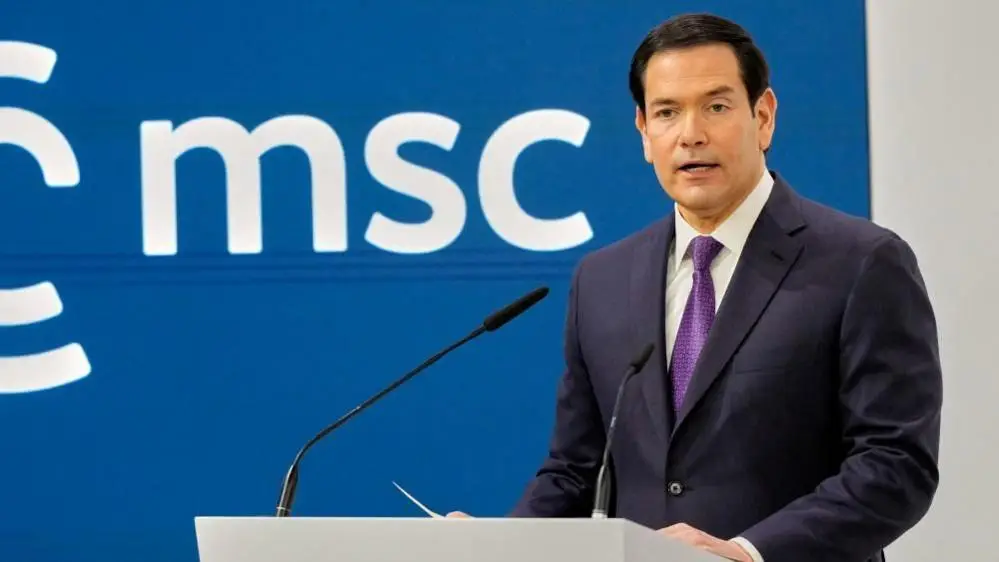
Marco Rubio, the U.S. Secretary of State, delivered a carefully calibrated message to European leaders at the Munich Security Conference, emphasizing Washington’s desire to revitalize rather than fracture the transatlantic alliance. His remarks followed a period of strained relations sparked by policy disagreements and controversial rhetoric surrounding territorial ambitions and defense commitments.
Rubio framed the partnership as a cornerstone of global stability, insisting that the United States sees a strong Europe as essential to preserving democratic institutions and countering geopolitical threats. The speech signaled a softer diplomatic tone after months of uncertainty that had left many allies questioning America’s long-term strategic intentions.
Trump-Era Policies Continue to Shape Diplomatic Dialogue
Despite the conciliatory language, the backdrop of Donald Trump’s foreign policy continues to influence perceptions across the continent. Recent disputes—including discussions about Greenland and criticism of European defense spending—have fueled skepticism about Washington’s reliability.
Rubio attempted to bridge that divide by portraying the alliance as a shared civilizational project rooted in history and mutual security interests. Yet analysts note that rhetoric alone may not erase structural disagreements over trade, military funding, and political priorities.
Immigration Emerges as a Central Strategic Concern
Immigration featured prominently in Rubio’s address, with the secretary describing mass migration as a destabilizing force across Western societies. The framing aligns with longstanding U.S. arguments that border security and demographic pressures carry national security implications.
European leaders remain divided on the issue, balancing humanitarian obligations with domestic political pressures. Rubio’s comments suggest Washington hopes to align migration policy more closely with broader security cooperation.
European Leaders Signal Support—but Not Strategic Change
Some officials welcomed the renewed emphasis on partnership. Defense ministers and diplomats described the speech as a needed reassurance that cooperation remains intact despite recent friction.
However, several policymakers cautioned that tone does not necessarily translate into policy shifts. European governments appear determined to maintain independent strategies, particularly as the region navigates complex relations with Russia and China.
Recommended Article: China and Argentina Deepen Strategic Partnership With Focus on Trade…
NATO Burden-Sharing Takes Center Stage
Calls for increased European defense spending echoed throughout the conference, reinforcing a longstanding American demand that allies shoulder more responsibility within NATO. Leaders acknowledged that strengthening military capabilities is increasingly urgent amid ongoing security threats.
Greater investment could reshape Europe’s defense posture, potentially leading to expanded industrial capacity and deeper coordination among member states. Such moves would also address recurring U.S. complaints about uneven contributions.
Ukraine War Keeps Security Risks Elevated
The continuing conflict in Ukraine served as a stark reminder of the stakes involved. Volodymyr Zelenskyy urged faster weapons deliveries, warning that delayed political decisions often lag behind rapidly evolving battlefield technologies.
Infrastructure damage across Ukraine has heightened concerns about long-term regional stability. For many European governments, the war underscores the necessity of close coordination with Washington despite periodic disagreements.
Europe Pushes for Strategic Autonomy
At the same time, European Commission President Ursula von der Leyen emphasized that Europe must assume greater responsibility for its own defense. Her remarks reflect a growing movement toward strategic autonomy without fully decoupling from American support.
The approach suggests a dual-track strategy: deepen cooperation with the United States while building independent capabilities that reduce vulnerability to political shifts in Washington.
Britain and France Explore Stronger Military Coordination
Discussions between Britain and France—Europe’s only nuclear powers—highlighted the possibility of deeper deterrence cooperation. Although not intended as a replacement for the U.S. nuclear umbrella, such collaboration could reinforce regional security architecture.
Experts believe enhanced coordination would signal resilience to adversaries while reassuring smaller NATO members that Europe can act decisively when necessary.
Russia Remains the Defining Security Challenge
Russia’s prolonged war effort continues to shape defense planning across the alliance. Policymakers increasingly view the conflict as a test of Western unity, with implications extending far beyond Eastern Europe.
Rubio acknowledged uncertainty over Moscow’s willingness to negotiate, reinforcing the need for sustained military readiness. The message resonated with leaders who see deterrence as the most reliable path to stability.
Diplomatic Tone Improves, but Trust Will Take Time
While Rubio’s speech marked a notable shift toward reassurance, rebuilding trust across the Atlantic will likely require consistent policy alignment rather than isolated gestures. Markets, defense planners, and diplomatic circles will watch closely for tangible cooperation.
The conference ultimately illustrated a shared recognition: despite disagreements, the United States and Europe remain deeply interconnected. Whether this renewed emphasis translates into lasting strategic cohesion may determine the trajectory of Western security in the years ahead.