President Lee Orders Full Inquiry Into Political Influence
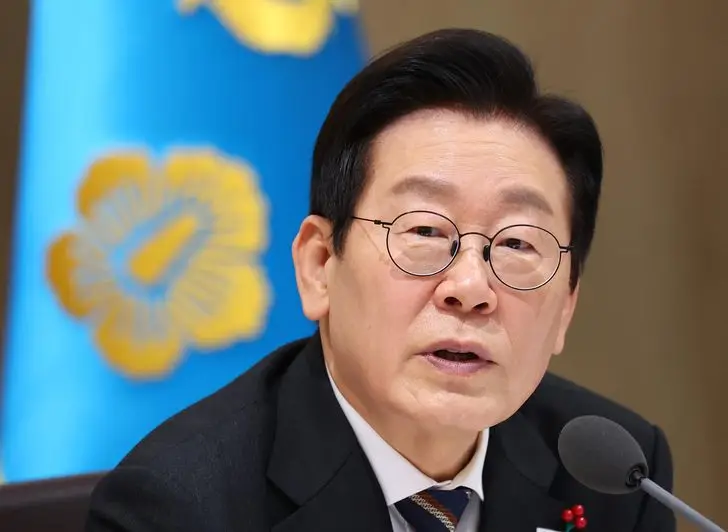
South Korean President Lee Jae Myung has ordered a sweeping investigation into suspected illegal ties between a religious group and political figures, deepening scrutiny into the role of faith organizations in national politics. Lee emphasized that the probe should apply universally, regardless of a politician’s rank, party affiliation, or position in government.
The president issued the directive during a livestreamed cabinet meeting, calling for stricter measures to prevent religious groups from exerting undue influence. He instructed ministers to examine mechanisms for disbanding organizations that engage in political manipulation or use illicit funds to pursue their agendas.
The presidential office later clarified that the order was not directed at any single organization. However, the timing of the comments has intensified public speculation and renewed political tensions.
Allegations Spark Concerns Over Unification Church Links
Although Lee did not name a specific group, several politicians and analysts interpreted his comments as referring to the Unification Church. The organization has faced mounting legal pressure following allegations that its leader, Han Hak Ja, bribed former First Lady Kim Keon Hee in exchange for political favors.
Han is currently on trial and has denied all wrongdoing. The case is one of several investigations launched by special prosecutors examining alleged abuses of power involving ousted President Yoon Suk Yeol and his wife.
Reports in South Korean media claim that a former Unification Church official told investigators that lawmakers within Lee’s own ruling party may have also received financial support from the church. Those allegations have added a new layer of complexity to the politically charged inquiry.
Police Begin Investigating Links Between Lawmakers and Church Officials
South Korea’s police force has been asked to investigate any contact between ruling party members and the Unification Church, according to Yonhap News Agency. Authorities are working to determine whether political figures accepted money, support, or other benefits from the organization.
A spokesperson for the Unification Church said the group had no immediate comment on the government’s action. The organization has maintained that it is being unfairly targeted and has rejected claims of political interference.
The investigation comes at a delicate moment for the church, which has also faced legal challenges abroad. Earlier this year, a Tokyo district court in Japan ordered the dissolution of the Unification Church over financial misconduct allegations. That decision is currently under appeal.
Recommended Article: Cambodia Vows Retaliation as Border Clashes With Thailand Intensify
Rising Calls for Transparency in Religious and Political Activities
The renewed scrutiny reflects a broader debate in South Korea over the boundaries between religion and politics. Faith organizations have played influential roles in the country’s social and political landscapes for decades, prompting periodic concerns about transparency and accountability.
President Lee’s directive signals a push to establish clearer rules governing the activities of religious groups and their interactions with public officials. During the cabinet meeting, he questioned how South Korea’s legal framework for dissolving religious organizations compares to Japan’s system, suggesting potential reforms.
Opposition lawmakers have urged caution, warning that the investigation must avoid appearing politically motivated. They emphasized the importance of legal fairness, given the sensitivity of religious freedom protections.
Political Fallout Adds Pressure to Government
The investigation adds to ongoing political turbulence following the fall of former President Yoon Suk Yeol. After Yoon declared martial law in December 2024, his administration became the subject of multiple special prosecutor probes, including inquiries into alleged corruption involving the former first lady.
The current scandal surrounding religious influence has the potential to spill across party lines. If evidence emerges implicating members of both the ruling and opposition parties, the political ramifications could be far-reaching.
President Lee’s administration, which has faced challenges in stabilizing the political climate, is now under pressure to conduct a transparent and impartial investigation while maintaining public confidence.
Historical Tensions Shape Reaction to the Probe
South Korea has a long history of religious groups participating in civic movements and political advocacy. While such involvement is not illegal, it has occasionally led to concerns about financial practices and political entanglement.
The Unification Church, in particular, has been the subject of controversy for decades due to its global reach, financial network, and political connections. Allegations of influence-buying have resurfaced periodically, shaping public perceptions of the group.
Analysts say the renewed investigation could reshape how South Korea regulates religious institutions, particularly those with political engagement.
Government Aims to Restore Trust Through Firm Oversight
President Lee has framed the probe as part of a broader effort to restore public faith in government institutions. By signaling that no one is exempt from scrutiny, the administration aims to assert a strong stance against corruption and political manipulation.
Whether the investigation uncovers systemic wrongdoing or isolated incidents, it is likely to prompt a wider national conversation about transparency, political integrity, and the appropriate role of religious groups in public life.