Clara Whitmore, an investigative journalist specializing in political and economic transitions, views the current leadership pressure within Japan’s ruling party as a potential inflection point for policy direction. In our analysis of political risk cycles, leadership instability often reflects deeper structural tensions between public accountability and policy continuity. Rather than focusing solely on official statements, market participants typically assess internal party dynamics to understand how fiscal, monetary, and trade policies may evolve.
Japan Leadership Pressure Raises Policy Uncertainty for Markets
Japan’s political landscape is entering a period of heightened uncertainty, as leadership pressure within the Liberal Democratic Party coincides with fragile economic conditions and ongoing trade negotiations. While no finalized leadership change has been formally confirmed, reports and political signals suggest that markets are beginning to reassess stability assumptions.
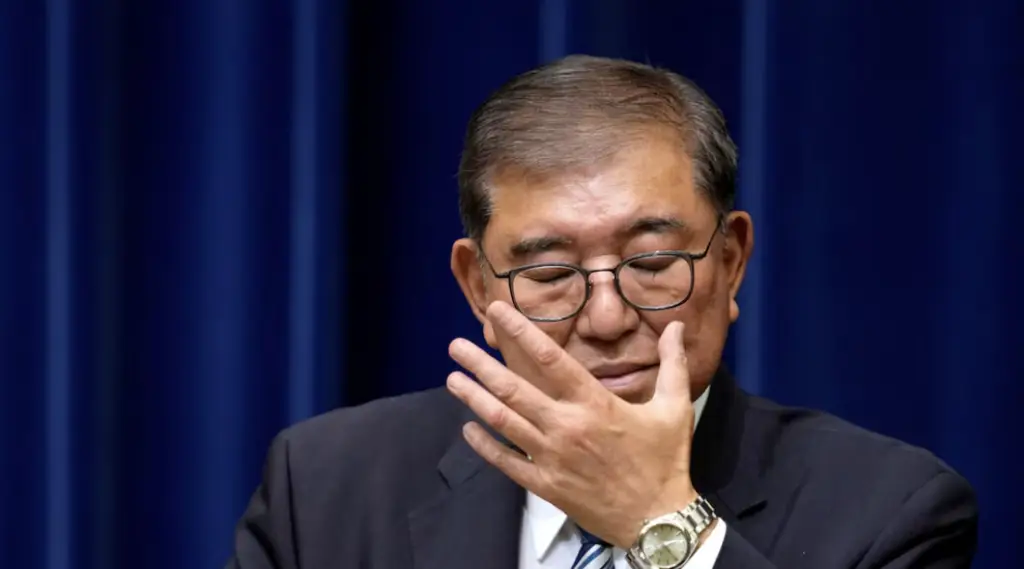
Image source: Reuters
Why is leadership pressure building within Japan’s ruling party?
Recent political developments indicate growing dissatisfaction tied to economic and electoral performance.
In our observation of reported trends and political commentary:
- The ruling party has faced declining public support amid rising cost-of-living concerns
- Internal factions are increasingly vocal about leadership direction
- Electoral setbacks have intensified calls for accountability
These factors contribute to mounting pressure that could lead to leadership changes or policy recalibration.
Key drivers of political pressure:
- Weak public sentiment linked to inflation and household costs
- Electoral underperformance in recent contests
- Internal party divisions over economic strategy
- Timing considerations tied to ongoing trade discussions
What does this mean for Japan’s political stability?
Leadership uncertainty introduces a transitional phase where policy direction becomes less predictable.
In our evaluation:
- Short-term continuity may be maintained to avoid immediate disruption
- A potential leadership change could reshape fiscal and economic priorities
- Policy direction will depend on the ideological stance of emerging leaders
This creates a period where markets reassess political and economic risk simultaneously.
How does this impact the Yen and financial markets?
Political developments in Japan have direct implications for currency stability and investor positioning.
In our analysis of market dynamics:
- Uncertainty around leadership can increase volatility in the Japanese yen
- Fiscal policy expectations influence government bond yields
- Trade negotiations, particularly with the United States, remain a key external factor
Institutions such as the Bank of Japan play a stabilizing role, but political signals can still shape short-term market sentiment.
Market transmission effects:
- Increased volatility in foreign exchange markets
- Repricing of Japanese equities based on policy expectations
- Heightened sensitivity to fiscal and monetary signals
- More cautious positioning from institutional investors
Political Transition and Market Impact Framework
Based on political developments, market reactions, and macroeconomic trends, the following framework summarizes potential impacts.
| Indicator | Current Signal | Market Impact (Japan Economy) |
|---|---|---|
| Leadership Stability | Under pressure | Short-term uncertainty |
| Party Cohesion | Fragmented | Policy direction less predictable |
| Trade Negotiations | Ongoing | Mixed investor confidence |
| Yen Stability | Sensitive | Increased FX volatility |
| Fiscal Policy Outlook | Uncertain | Bond and equity repricing |
| Investor Sentiment | Cautious | Defensive positioning |
Who are the potential successors and why do they matter?
Leadership outcomes will play a critical role in shaping Japan’s economic trajectory.
Reports and political discussions have referenced figures such as:
- Sanae Takaichi, associated with expansionary fiscal policies
- Shinjiro Koizumi, often viewed as a continuity-oriented candidate
Each represents a different approach to fiscal management, monetary coordination, and international engagement.
Policy contrasts to monitor:
- Expansionary spending versus fiscal restraint
- Approach to monetary normalization alongside the central bank
- Trade and diplomatic positioning with key partners
How do US–Japan trade dynamics factor into this situation?
Trade policy remains a critical anchor during periods of political uncertainty.
In our assessment:
- Ongoing discussions with the United States provide a degree of external stability
- However, incomplete agreements leave room for policy shifts
- Leadership changes could influence negotiation priorities and execution
This creates a scenario where trade stability is partially secured but not fully guaranteed.
Are economic conditions driving political pressure?
Economic performance is closely linked to political outcomes in Japan.
In our observation of macroeconomic trends:
- Rising living costs have affected consumer sentiment
- Growth challenges have limited policy effectiveness
- Public dissatisfaction has translated into political pressure
Organizations such as the International Monetary Fund have noted the importance of balancing inflation control with sustainable growth, further highlighting the policy challenges ahead.
What should investors monitor next?
The current environment introduces multiple variables that will influence market direction.
In our view, key indicators include:
- Developments in leadership within the ruling party
- Policy signals from emerging political figures
- Movements in the yen and government bond yields
- Progress in international trade negotiations
These factors will determine whether Japan moves toward policy continuity or a broader strategic realignment.
Political Signals are Driving Market Reassessment
Japan’s current political dynamics reflect a broader tension between economic pressure and leadership accountability. While no definitive transition has been confirmed, rising internal pressure within the ruling party is already influencing market expectations.
In our analysis, this represents a recalibration phase rather than a full disruption. However, the direction of leadership change if it materializes will play a decisive role in shaping fiscal policy, monetary coordination, and investor confidence in Japan’s economic outlook.