Clara Whitmore, a journalist who covers global political risk and how countries compete for power, sees recent tensions as a reminder that trust not just government statements affects how markets act. In our analysis of global political patterns, gaps between what governments say and what actually happens often shape country partnerships and investor trust. For markets, trust is not just an idea it directly affects how risk is valued across investments.
Global Risk Environment Tightens Amid U.S. and Regional Conflicts
Recent global political events in the United States, the Middle East, and Eastern Europe are being seen by more investors as signs of unclear government policy, not just separate events. Reports from global news and experts say that current talks in conflict areas have not led to clear results, leading to a more cautious mood in global markets.
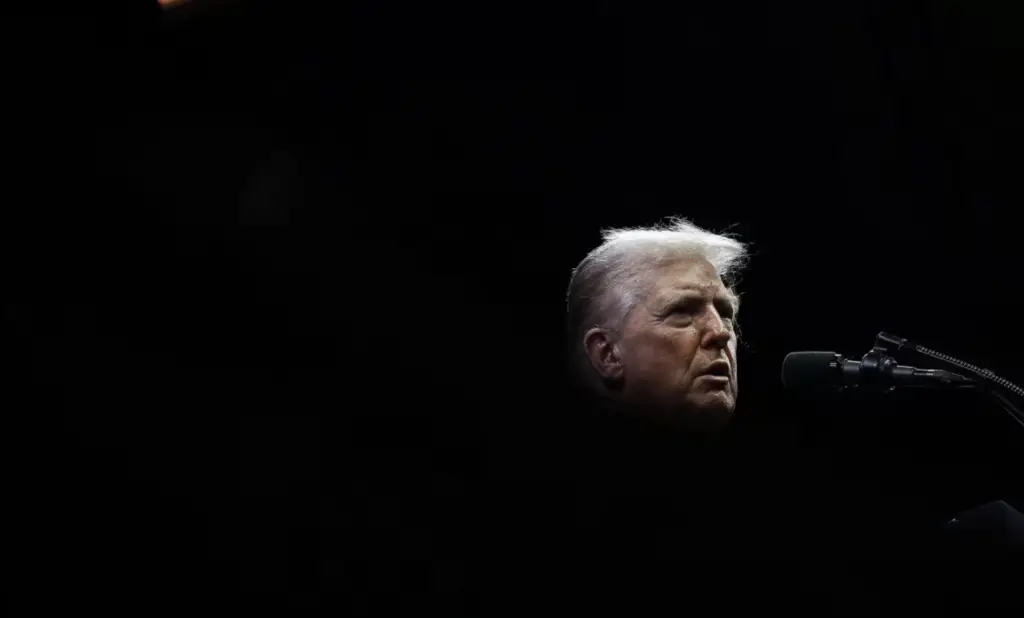
Image source: CNN
What recent developments are influencing market sentiment?
A combination of ongoing conflicts and stalled diplomatic progress is shaping investor expectations.
In our observation of reported geopolitical trends:
- Ceasefire negotiations in conflict regions, including Gaza and Ukraine, have faced delays
- Tensions involving Russia and NATO members remain elevated amid continued military activity
- Diplomatic engagement by the United States has not yet resulted in clear, enforceable resolutions
Markets see these factors as signs of long-lasting uncertainty rather than short-term stability.
Immediate geopolitical signals:
- Reduced clarity around conflict resolution timelines
- Increased probability of extended geopolitical tensions
- Ongoing uncertainty in diplomatic negotiations
Why does U.S. geopolitical credibility matter for markets?
The United States plays a central role in shaping global financial and security frameworks.
In our evaluation:
- U.S. leadership influences sanctions regimes that affect global trade and commodities
- Security alliances such as NATO impact defense spending and regional stability
- Policy coordination affects investor confidence in geopolitical risk containment
When policy outcomes appear uncertain or delayed, markets tend to adjust risk premiums accordingly.
Channels of market sensitivity:
- Energy markets, driven by conflict duration and supply risks
- Defense equities, influenced by spending expectations
- Foreign exchange markets, particularly safe-haven flows
- Global equities, reflecting risk-on versus risk-off positioning
How are equities, energy, and risk assets reacting?
Market responses to geopolitical uncertainty are typically sector-specific rather than uniform.
In our analysis of current behavior:
- Energy prices remain supported due to concerns over prolonged instability
- Defense-related equities may benefit from expectations of sustained spending
- Broader equity markets show cautious positioning amid unclear policy direction
Also, demand for safer investments is still high, showing ongoing uncertainty.
Observed market behavior:
- Mixed equity performance with a defensive bias
- Sensitivity of oil prices to Middle East developments
- Continued demand for assets perceived as stable during volatility
Geopolitical Signals and U.S. Market Impact Framework
Based on geopolitical developments, market reactions, and risk-pricing trends, the following framework summarizes current dynamics.
| Indicator | Current Signal | Market Impact (US Assets) |
|---|---|---|
| US Diplomatic Influence | Under scrutiny | Higher geopolitical risk premium |
| Middle East Stability | Uncertain | Support for energy prices |
| Russia–NATO Dynamics | Elevated tension | Strength in defense sector |
| Ceasefire Negotiations | Ongoing | Sustained uncertainty |
| Ally Coordination | Mixed signals | Volatility in global equities |
| Safe-Haven Demand | Elevated | Support for defensive assets |
What are the biggest unresolved risks?
Markets are focused on developments that lack clear resolution timelines.
In our observation of current conditions:
- Mediation efforts in conflict zones remain ongoing without definitive breakthroughs
- Tensions between Russia and Western alliances continue to evolve
- Multiple geopolitical flashpoints remain interconnected
These factors contribute to a sustained risk environment rather than a temporary disruption.
Why are U.S. allies responding cautiously?
Allies are reassessing strategic expectations in light of evolving global dynamics.
In our assessment:
- Policy coordination across alliances appears less predictable in the short term
- Strategic autonomy discussions are gaining traction in Europe and other regions
- Governments are balancing reliance on partnerships with domestic policy priorities
This gradual recalibration may influence long-term alliance structures.
How does this affect long-term U.S. market positioning?
The implications extend beyond immediate volatility into structural market considerations.
In our view:
- Persistent geopolitical uncertainty may support long-term defense spending cycles
- Energy markets could remain sensitive to global conflict developments
- Equity markets may experience periodic repricing tied to geopolitical signals
The key shift is that geopolitical credibility is becoming a continuous factor in valuation models.
Can diplomacy stabilize markets in the near term?
Short-term stability depends on clarity and measurable progress.
In our observation:
- Continued dialogue can reduce extreme downside scenarios
- Lack of enforceable agreements limits confidence in sustained stability
- Mixed signals create uneven reactions across asset classes
Markets are now driven by news and respond quickly to new events.
How should investors interpret current geopolitical conditions?
The current phase reflects risk recalibration rather than systemic breakdown.
In our analysis, investors are likely to:
- Maintain exposure to defensive sectors during uncertainty
- Monitor geopolitical developments as key market catalysts
- Adjust portfolios for prolonged volatility rather than immediate resolution
The core takeaway is structural: geopolitical signals, particularly those linked to U.S. policy effectiveness, are increasingly embedded in how global markets assess and price risk.