Oil Shock Hits Global Economy Already Facing Weak Growth

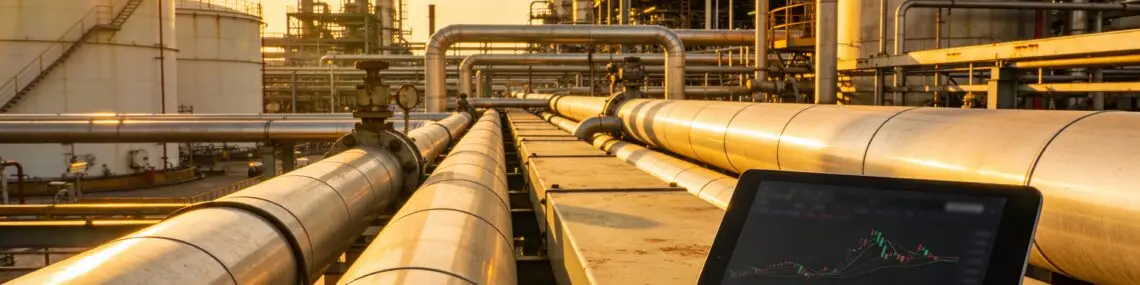
Oil Price Surge Sends Shock Through Global Markets The global economy is facing renewed pressure as oil prices surge following escalating tensions in the Middle East. Energy markets reacted sharply after military developments involving Iran raised fears of supply disruptions across key shipping routes. Oil shocks historically create difficult conditions for policymakers because they slow…


Bitcoin’s $1 Trillion Identity Crisis Deepens Amid Market Turmoil

A Market Giant Facing Existential Questions Bitcoin’s valuation once symbolized financial disruption, but its recent 40% decline has revived doubts about its foundational purpose. After reaching historic highs, the world’s largest cryptocurrency now finds itself under pressure from multiple directions. What once seemed like a clear macro hedge narrative has fragmented. Investors are no longer…

US Economy Slows to Solid 3% Growth as Inflation and AI Shape Outlook

Growth Cools After Strong Midyear Expansion The United States economy likely slowed in the fourth quarter, but remained on relatively firm footing with growth projected near a 3% annualized pace. After accelerating sharply during the third quarter, economic activity moderated as government disruptions and softer household spending weighed on output. Economists anticipate that the Commerce…

Oil Surges Past $70 as US-Iran Tensions Shake Global Markets

Oil Extends Rally on Rising Middle East Risk Oil prices climbed to multi-month highs as geopolitical tensions between the United States and Iran reignited fears of potential supply disruptions. Brent crude settled above $71 per barrel after briefly reaching its strongest level since mid-2025, reflecting renewed risk premiums embedded into energy markets. The rally followed…

AI Wasn’t the Main Engine of U.S. Growth in 2025, Economists Say

AI Boom Dominated Headlines, Not GDP Math Artificial intelligence dominated financial headlines throughout 2025, with massive investments in data centers, chips, and software reshaping markets. From soaring tech valuations to record bond issuance funding AI infrastructure, many observers concluded AI was the primary force keeping the U.S. economy afloat. However, fresh economic analysis suggests that…

Adaptability Becomes the Defining Advantage for US Business Leaders in 2026

US Executives Show Confidence Despite Uncertainty American business leaders are entering 2026 with unusually high confidence, even as economic uncertainty, trade disruption, and geopolitical risks persist. A recent survey of senior executives reveals that optimism remains widespread, driven less by favorable conditions and more by confidence in execution. Nearly all respondents expect revenue growth in…

U.S. Consumer Spending Slows as Credit Replaces Confidence in Early 2026

Spending Continues, but the Mood Has Shifted U.S. consumers entered 2026 still spending, but with a noticeably different posture than in prior years. Retail sales remain positive, travel demand has not collapsed, and services spending continues to support headline growth. Beneath the surface, however, confidence has weakened. Households are increasingly spending out of necessity rather…

U.S. Small Businesses Face a Silent Credit Squeeze in Early 2026

Spending Continues, but the Foundation Is Shifting At first glance, U.S. consumer spending in early 2026 appears resilient. Retail sales remain positive, travel demand has not collapsed, and service-sector activity continues to support growth. Yet beneath these headline figures, the structure of consumer behavior is changing in ways that raise concern. Rather than spending driven…

US Corporations Reshape Supply Chains as Resilience Replaces Efficiency in 2026

Supply Chain Strategy Enters a New Phase American corporations entered 2026 with supply-chain resilience firmly embedded as a strategic priority. After years of disruptions caused by pandemics, wars, and trade disputes, companies are no longer optimizing solely for cost efficiency. Executives increasingly view supply chains as risk-management systems rather than logistical backbones, reshaping how capital…

US Corporations Shift Investment Strategy as Higher Rates Reshape 2026 Outlook

Corporate Spending Enters a More Selective Phase American corporations entered 2026 with a noticeably more cautious approach to spending. After years of aggressive expansion fueled by cheap capital, higher interest rates have forced executives to reassess priorities. Rather than broad growth initiatives, companies are focusing on targeted investments that promise clear productivity gains or cost…