


A Historic Shift in Bitcoin’s Annual Performance
Bitcoin is poised to record its first annual loss since 2022 after two consecutive profitable years. The downturn comes despite bitcoin reaching a new all-time high earlier in 2025. Momentum faded significantly during the final quarter as macro pressures intensified. Investors who expected another year of explosive gains were instead met with prolonged consolidation. The price retreated steadily following October’s peak. By late December, confidence across crypto markets had noticeably weakened. The shift marked a psychological turning point for long-term holders.
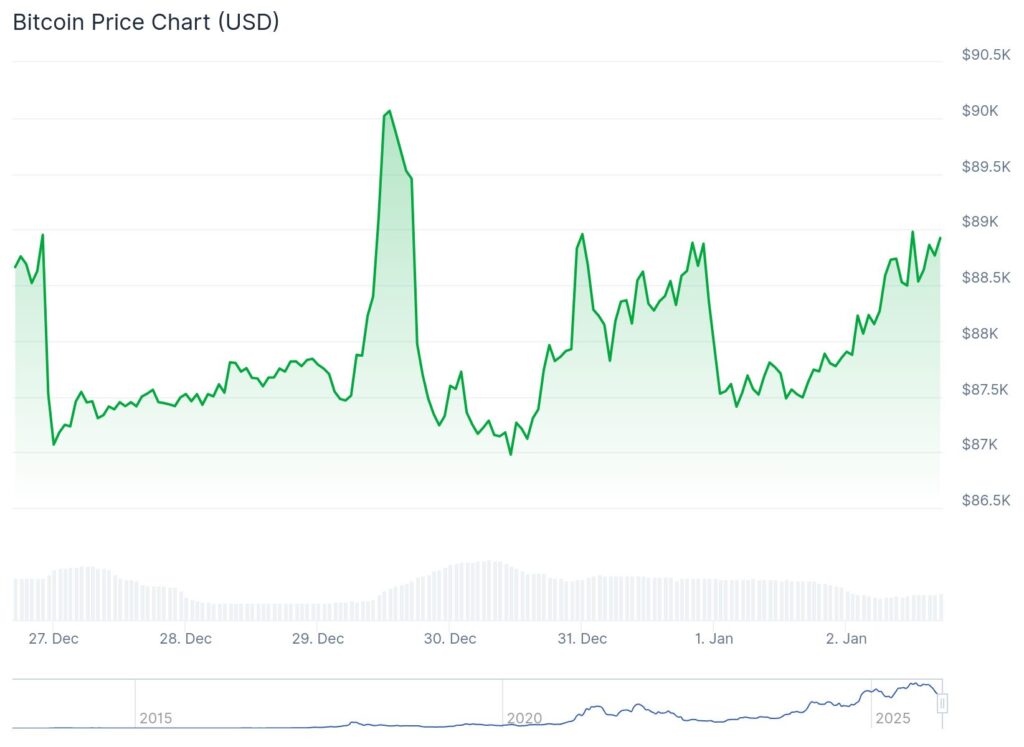
Bitcoin was trading near $87,000 as the year closed, reflecting a decline of more than six percent. This reversal stands in contrast to strong gains posted in 2023 and 2024. Market participants increasingly cited macroeconomic headwinds as the primary cause. Liquidity conditions tightened across risk assets during the second half of the year. Crypto markets failed to decouple from broader financial turbulence. Selling pressure intensified as volatility returned. The result was a subdued year-end close.
Early-Year Optimism Fueled by Political Change
Bitcoin surged sharply at the start of 2025 following the election of Donald Trump. Investors anticipated deregulation and a friendlier stance toward digital assets. Campaign promises framed the administration as supportive of crypto innovation. Institutional interest accelerated alongside retail enthusiasm. Capital flowed aggressively into spot ETFs and crypto equities. Optimism pushed prices higher through the first half of the year. Bitcoin briefly appeared positioned for another historic cycle.
By early October, bitcoin surpassed $126,000 for the first time. Expectations centered on easing monetary policy and regulatory clarity. Market sentiment turned overwhelmingly bullish across crypto platforms. Leverage increased rapidly as traders chased upside momentum. Analysts projected further gains before year-end. The rally fed confidence in a prolonged bull market. That confidence would prove fragile.
Tariffs Trigger a Violent Market Reversal
Market sentiment shifted abruptly after new US tariff announcements targeting Chinese imports. President Trump also threatened export controls on sensitive technologies. Risk assets sold off sharply across global markets. Bitcoin reacted violently alongside equities and commodities. Within days, crypto markets entered a steep correction. Leverage amplified losses across derivatives platforms. Panic selling accelerated throughout October.
More than $19 billion in leveraged positions were liquidated. This marked the largest liquidation event in crypto history. The scale of the crash stunned investors and exchanges alike. Liquidity evaporated during peak volatility periods. Bitcoin failed to recover its prior momentum afterward. Confidence in short-term price stability weakened. The market entered a prolonged cooling phase.

Bitcoin’s Growing Correlation With Risk Assets
Analysts increasingly observed bitcoin trading like a traditional risk asset. Price movements aligned closely with US equity benchmarks throughout 2025. Periods of stock market weakness coincided with crypto sell-offs. This correlation strengthened during macro-driven volatility events. Bitcoin no longer behaved as a standalone hedge. Instead, it mirrored shifts in investor risk appetite. The transformation reflected broader market integration.
According to analysts, institutional adoption played a central role in this change. Traditional investors treat bitcoin as part of diversified portfolios. Exposure is adjusted alongside stocks and bonds. Monetary policy decisions now influence crypto more directly. Interest rate expectations weigh heavily on sentiment. AI-sector valuations also impact correlated assets. Bitcoin’s independence continues to narrow.
Recommended Article: Bitcoin Reclaims $90,000 as Rising Oil Prices and War Tensions Disrupt Global Markets
Regulatory Wins Fail to Lift Market Confidence
The crypto industry achieved notable regulatory wins under the Trump administration. US regulators dropped several high-profile enforcement actions. Lawsuits against Coinbase and Binance were dismissed. Stablecoin legislation also advanced at the federal level. These developments were widely celebrated by industry leaders. Political momentum appeared favorable for crypto adoption. Expectations for reform grew rapidly.
Despite progress, market sentiment failed to recover meaningfully. Core market structure reforms remain unresolved. Industry executives warn of lingering regulatory uncertainty. Carve-outs from securities laws are still pending. Investors remain cautious without clearer frameworks. Short-term optimism faded as delays mounted. Regulatory wins alone proved insufficient.
Institutional Capital Reshapes Bitcoin’s Market Behavior
Institutional participation expanded significantly throughout 2025. Pension funds, asset managers, and corporates increased exposure. Spot ETFs attracted billions in inflows earlier in the year. This participation deepened liquidity across markets. It also altered bitcoin’s volatility profile. Price swings became more macro-sensitive. Institutional strategies increasingly dominated flows.
Retail investors now play a reduced role in price discovery. Large funds drive directional moves during macro events. Portfolio rebalancing influences bitcoin alongside equities. Correlations rise during periods of financial stress. The asset behaves less like an alternative hedge. Instead, it functions as a high-beta instrument. This evolution continues to redefine bitcoin’s identity.
What Bitcoin’s First Loss Since 2022 Signals
Bitcoin’s annual loss does not signal structural collapse. Instead, it reflects the asset’s growing maturity. Integration into global markets brings new constraints. Price action is now shaped by macro cycles. Political decisions influence volatility more directly. Investor expectations are adjusting accordingly. The market is recalibrating.
As 2026 approaches, attention shifts toward potential catalysts. Monetary policy changes could alter sentiment quickly. Regulatory clarity remains a critical factor. Institutional inflows may resume under favorable conditions. Bitcoin’s long-term narrative remains intact. Short-term performance reflects external pressures. The next cycle may depend on stability returning.