

Geopolitical Confrontation Emerges as the Leading Global Risk
A newly released Global Risks Report ahead of Davos 2026 places great-power rivalry at the top of the world’s short-term risk hierarchy. Political leaders, business executives, and policy experts surveyed for the report overwhelmingly identified escalating competition between major powers as the most immediate threat to global stability.
The findings underscore how geopolitical dynamics have shifted from cooperation-driven globalization toward confrontation-driven fragmentation. Rather than isolated flashpoints, rivalry is increasingly systemic, influencing trade, technology, security, and financial flows simultaneously.

Economic Competition Replaces Traditional Conflict Models
Unlike past eras defined primarily by military standoffs, today’s great-power rivalry is largely economic and technological. Tariffs, export controls, sanctions, and industrial policy have become the primary tools of statecraft.
According to the report published by the World Economic Forum, respondents view economic coercion as more likely than armed conflict to disrupt global stability in the near term. Supply chain restrictions, technology bans, and financial decoupling are now central features of geopolitical competition.
Supply Chains Face Structural Reconfiguration
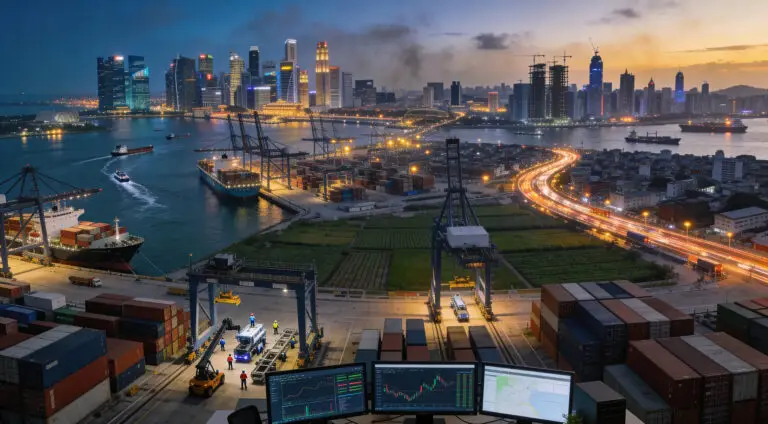
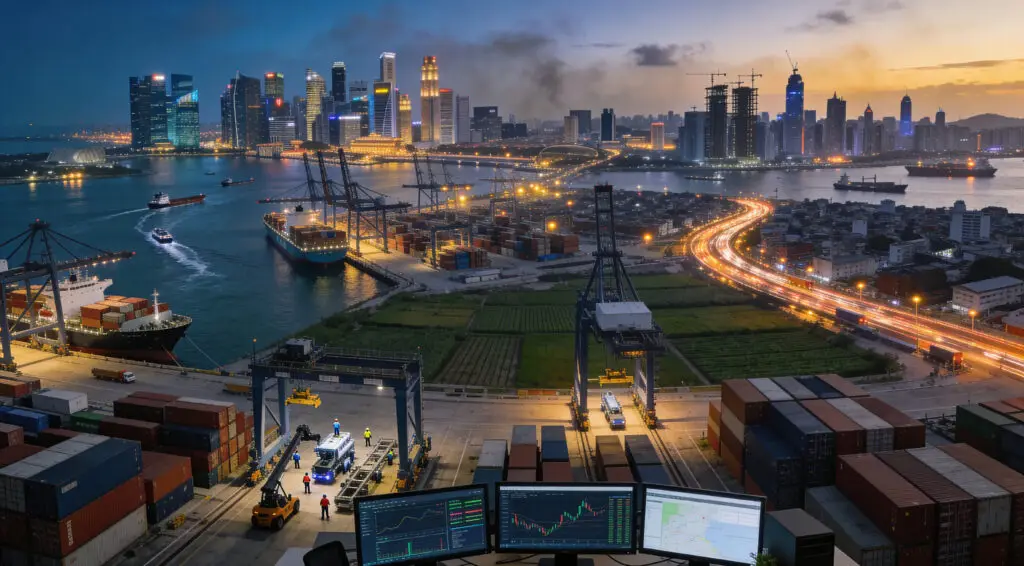
One of the clearest economic consequences of rising rivalry is the reconfiguration of global supply chains. Companies and governments are prioritizing resilience, redundancy, and political alignment over efficiency and cost optimization.
The report notes that near-shoring, friend-shoring, and strategic stockpiling are accelerating across industries ranging from semiconductors to energy infrastructure. While these shifts reduce exposure to geopolitical shocks, they also raise costs and contribute to inflationary pressures.
Fragmentation Weakens Global Governance
Survey participants expressed growing concern that geopolitical rivalry is eroding multilateral institutions. Cooperation on global challenges such as climate change, public health, and digital standards is becoming more difficult as trust between major powers declines.
More than half of respondents expect global governance mechanisms to weaken further over the next decade. This fragmentation risks creating regulatory divergence, overlapping standards, and competitive blocs that complicate international coordination.
Recommended Article: Russia Tightens Political Control as Economic Pressure Reshapes Governance in…
Technology Competition Intensifies Strategic Tensions
Technology sits at the heart of modern great-power rivalry. Artificial intelligence, advanced chips, cybersecurity, and quantum computing are increasingly viewed as strategic assets rather than neutral innovations.
The Global Risks Report highlights fears that unchecked technological competition could fuel arms races in digital and autonomous systems. Concerns about intellectual property theft, national security vulnerabilities, and unequal access to innovation are intensifying policy disputes.
Labor Markets and Social Stability Enter the Risk Equation
Beyond geopolitics, the report emphasizes how rivalry intersects with domestic pressures. Technological disruption and trade realignment are reshaping labor markets, contributing to inequality and social tension within countries.
Respondents warned that economic insecurity linked to globalization’s retreat could amplify political polarization. This feedback loop, where domestic unrest fuels aggressive foreign policy postures, increases the risk of miscalculation.
Davos 2026 Focuses on Dialogue Under Strain
The upcoming World Economic Forum Annual Meeting in Davos will convene amid this backdrop of heightened rivalry. Organizers have framed the 2026 meeting around restoring dialogue and trust across geopolitical divides.
High-level participation from the United States, Europe, and emerging economies is expected. However, analysts caution that dialogue alone may struggle to reverse structural forces driving competition unless accompanied by tangible policy shifts.
Implications for Global Markets and Investors
Markets are increasingly pricing geopolitical risk into asset valuations. Industries exposed to trade policy, regulation, and cross-border investment face heightened uncertainty.
The report suggests that capital allocation will continue favoring sectors aligned with national priorities, including defense, energy security, and domestic manufacturing. For investors, understanding geopolitical alignment has become as important as traditional financial metrics.
A World Moving Toward Managed Competition
Rather than predicting imminent collapse, the Global Risks Report portrays a world entering an era of managed competition. Rivalry is expected to persist, but leaders may seek guardrails to prevent escalation.
Whether such guardrails can hold will depend on political will, institutional resilience, and the ability to balance national interests with shared global challenges. As Davos 2026 approaches, great-power rivalry stands not just as a risk, but as the defining context for global decision-making in the years ahead.