Elena “Lina” Chen, a blockchain developer and DeFi security auditor specializing in on-chain systems and liquidity dynamics, interprets the recent Bitcoin drawdown as a liquidity-driven reset rather than a breakdown in fundamentals. In our analysis of blockchain data and macro cycles, declining participation and capital outflows are consistent with broader tightening conditions across global markets. As institutional participation grows, crypto markets are increasingly behaving like traditional financial systems, where liquidity not narrative drives price action.
Bitcoin’s Decline Signals Liquidity Reset in a Macro-Driven Market
Recent market data indicates that Bitcoin has experienced a significant correction from prior highs, with declines approaching 30% during recent volatility phases, depending on the timeframe observed. According to aggregated ETF flow data from CoinShares and on-chain analytics from Glassnode, the downturn is closely linked to institutional outflows, reduced trading activity, and broader macro tightening.
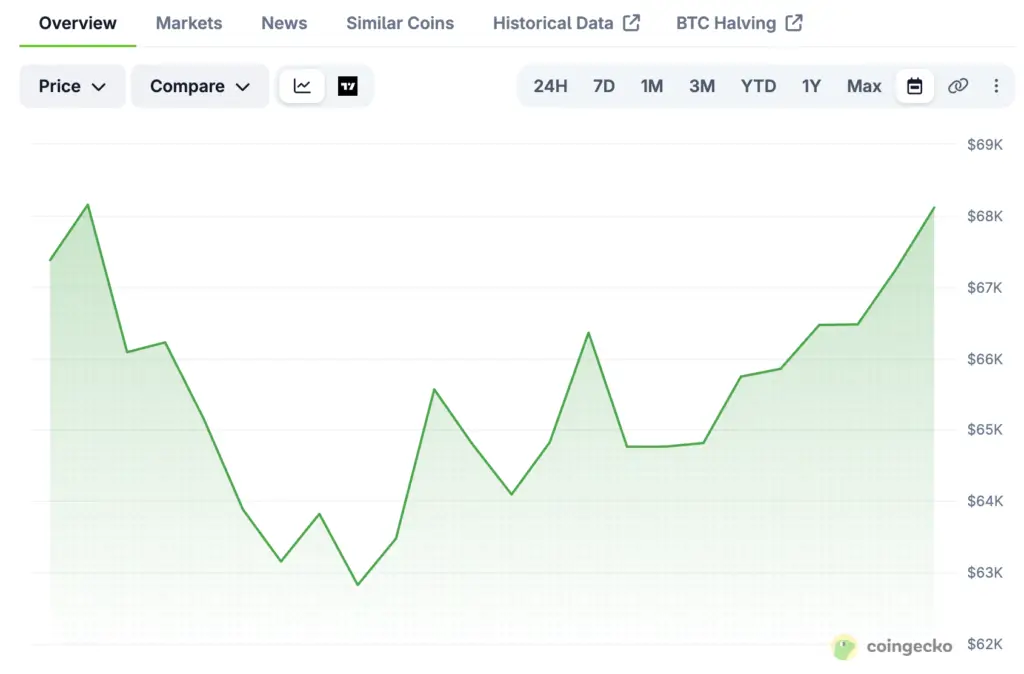
Why is Bitcoin falling despite supportive policy signals?
Market behavior suggests that liquidity conditions outweigh policy narratives in the short term.
In our analysis of market data and institutional reports:
- Digital asset investment products have experienced periods of net outflows, reflecting reduced institutional demand
- Trading volumes across major exchanges have moderated, indicating declining liquidity
- Investor positioning has shifted toward risk reduction amid macro uncertainty
This reinforces the idea that capital flows not regulatory or political sentiment are the dominant drivers of price.
Primary drivers of the decline:
- Net outflows from U.S.-listed spot Bitcoin ETFs
- Reduced institutional participation during risk-off periods
- Declining liquidity across centralized and decentralized markets
- Weakening speculative demand following prior rallies
What role are ETFs playing in the downturn?
Exchange-traded funds have become a key transmission channel for institutional capital.
Based on flow data and market observations:
- Periods of inflows during earlier rallies helped drive price momentum
- Recent weeks have seen intermittent net outflows, contributing to downward pressure
- Institutional repositioning amplifies volatility due to the scale of capital involved
This creates a feedback loop where reduced inflows tighten liquidity, increasing price sensitivity.
How are macro conditions influencing crypto prices?
Crypto markets are increasingly integrated into the broader financial system.
In our analysis, supported by signals from the Federal Reserve:
- Interest rate expectations and monetary policy shifts are influencing risk asset allocation
- A relatively stronger U.S. dollar environment can reduce demand for speculative assets
- Volatility in equities and commodities is spilling over into crypto markets
This reflects Bitcoin’s transition toward a macro-sensitive asset class.
Market transmission effects:
- Reduced risk appetite across global markets
- Increasing correlation between crypto and equities
- Higher sensitivity to monetary policy signals
- Liquidity contraction across asset classes
Crypto Market Downturn and Macro Signal Framework
Based on ETF flow data, on-chain metrics, and macroeconomic indicators, the following framework summarizes current conditions.
| Indicator | Current Signal | Market Impact (US Crypto Market) |
|---|---|---|
| Bitcoin Price Trend | Downward (recent) | Bearish sentiment |
| ETF Flows | Mixed to net outflows | Reduced institutional demand |
| Trading Volume | Moderating | Lower liquidity |
| Interest Rate Outlook | Elevated/uncertain | Pressure on risk assets |
| Market Sentiment | Weakening | Reduced investor confidence |
| Liquidity Cycle | Contracting | Increased volatility |
Is this a typical “crypto winter”?
The current downturn shares characteristics with previous cycles.
According to historical market patterns and on-chain data:
- Corrections often follow periods of rapid price appreciation
- Market sentiment shifts from optimism to risk aversion
- Liquidity and participation decline during downturn phases
While each cycle is unique, macro tightening has historically been a consistent trigger.
Why does the crypto market depend on sentiment cycles?
Liquidity in crypto markets is closely tied to participation dynamics.
In our assessment:
- Retail participation tends to increase during bullish narratives
- Fear of missing out (FOMO) drives volume and price acceleration
- When sentiment weakens, liquidity contracts rapidly
This creates a cyclical pattern where sentiment and liquidity reinforce each other.
Cycle dynamics:
- Rising prices → increased participation → higher liquidity
- Falling prices → reduced interest → lower liquidity
- Lower liquidity → sharper price volatility
How are other assets influencing Bitcoin’s decline?
Crypto markets are increasingly influenced by broader financial conditions.
We observed that:
- Equity market volatility affects risk appetite across portfolios
- Movements in commodities such as gold can shift capital allocation preferences
- Investors may rotate into lower-volatility assets during uncertainty
This reinforces Bitcoin’s positioning as part of the broader risk asset spectrum.
Are pro-crypto policies failing to support the market?
Policy support plays a long-term role but has limited short-term impact.
In our view:
- Regulatory clarity supports adoption and infrastructure development
- Short-term price movements remain driven by liquidity and demand
- Macro conditions can override policy signals during tightening cycles
This explains why supportive policy narratives do not always translate into immediate price stability.
What should investors expect next?
Crypto market cycles are historically cyclical, though timing remains uncertain.
In our analysis, key indicators include:
- Stabilization or reversal of ETF flows
- Recovery in trading volume and on-chain activity
- Shifts in monetary policy from the Federal Reserve
- Improvement in overall market sentiment
These factors will determine whether the current phase transitions into consolidation or recovery.
How should investors interpret this downturn?
The current environment emphasizes discipline over narrative-driven positioning.
In our analysis, investors should:
- Reassess exposure to high-volatility assets
- Monitor macroeconomic and liquidity signals closely
- Focus on long-term fundamentals rather than short-term price action
The broader takeaway is structural: crypto markets are evolving into macro-driven financial systems. As institutional participation increases, liquidity cycles and monetary conditions are becoming the dominant forces shaping price behavior, outweighing hype-driven narratives alone.