Volatility Differences Shape Investor Expectations
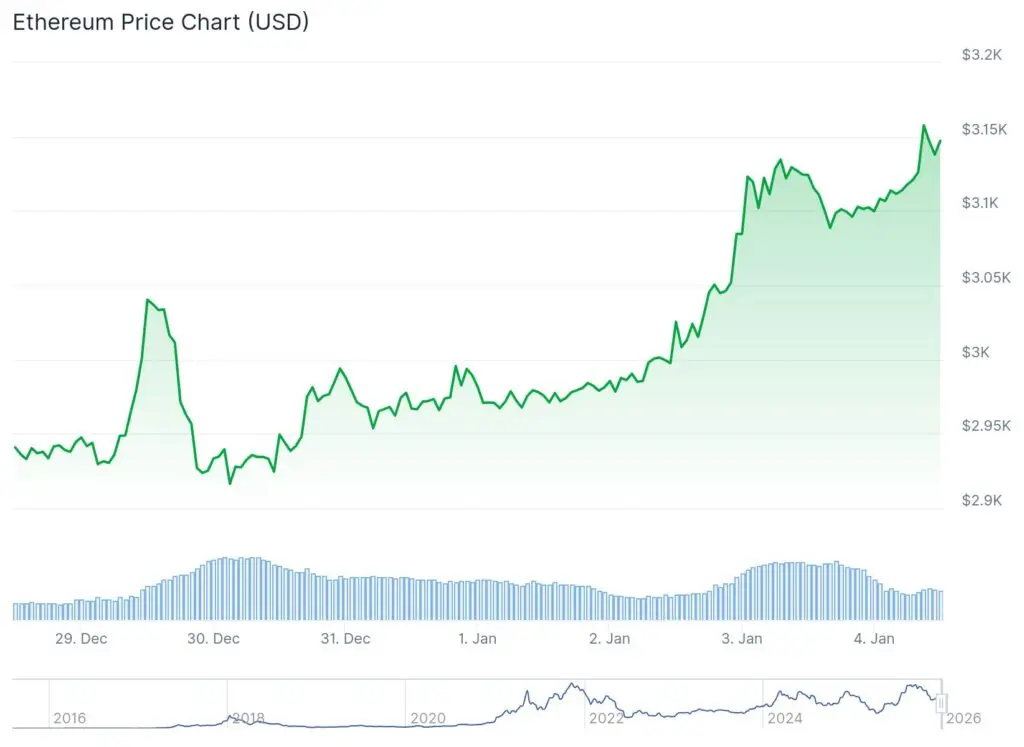
Ethereum has consistently shown greater volatility than Bitcoin across multiple market cycles. Ethereum typically rallies harder during bullish phases but also experiences deeper drawdowns during selloffs. In 2025, Ethereum underperformed Bitcoin as tightening financial conditions reduced speculative appetite. This pattern reinforced Ethereum’s reputation as a higher-risk, higher-reward asset. Many traders are drawn to these sharper price movements. However, volatility alone does not ensure superior long-term performance.
Both assets often respond to the same macroeconomic forces. Interest rate expectations, liquidity conditions, and global risk sentiment tend to push Bitcoin and Ethereum in the same direction. Ethereum’s moves are usually amplified versions of Bitcoin’s trends. This makes timing more critical for ETH-focused strategies. While volatility creates opportunity, it also magnifies losses. Investors must account for this trade-off when assessing upside potential.
Historical Performance Across Crypto Market Cycles
Ethereum significantly outperformed Bitcoin during the 2020–2021 bull run. Growth in decentralized finance and NFTs drove massive demand for Ethereum-based applications. Capital inflows into DeFi protocols translated into strong relative price gains for ETH. Bitcoin, meanwhile, maintained its role as a store-of-value asset. The divergence highlighted Ethereum’s leverage to innovation-driven cycles. These conditions favored Ethereum during periods of rapid experimentation.
That advantage faded after 2021. Despite network upgrades and efficiency improvements, Ethereum has lost substantial value relative to Bitcoin. This suggests that utility narratives alone may not sustain long-term outperformance. Investors increasingly prioritize capital preservation during extended downturns. Bitcoin’s simpler investment thesis has proven resilient. These historical patterns complicate Ethereum’s upside argument.
Functional Advantages Ethereum Holds Over Bitcoin
Ethereum’s primary strength lies in its functionality beyond price appreciation. The network supports smart contracts, decentralized applications, NFTs, and complex financial instruments. ETH holders can also earn yield through staking, a feature Bitcoin lacks natively. Roughly one-third of Ethereum’s circulating supply is staked. This provides passive income opportunities for long-term holders. Yield generation adds an additional layer of value to Ethereum ownership.
Layer 2 networks have further enhanced Ethereum’s usability. Transaction fees have dropped significantly compared with previous years. Lower costs enable broader participation from developers and users. This expansion supports adoption across payments, gaming, and enterprise use cases. Improved scalability strengthens Ethereum’s long-term utility thesis. Sustained adoption, however, remains essential.
Recommended Article: Bitcoin Enters 2026 Near $87,000 as Momentum Fades After Record…
Security and Regulatory Risks Facing Ethereum
Ethereum’s complexity introduces risks that Bitcoin largely avoids. Smart contracts increase the number of potential attack vectors. Several decentralized finance platforms have suffered costly hacks. These incidents undermine confidence during periods of market stress. Security concerns remain an ongoing challenge for the ecosystem. Bitcoin’s limited scripting reduces comparable exposure.
Regulatory uncertainty also weighs on Ethereum. Bitcoin is widely treated as a commodity, offering relative clarity. Ethereum’s classification has shifted over time and remains unsettled. A regulatory reclassification could disrupt exchanges and applications rapidly. This uncertainty introduces valuation risk. Investors must factor regulatory exposure into long-term projections.
Competitive Pressure From Alternative Blockchains
Ethereum faces growing competition from newer Layer 1 networks. Some rivals offer faster transaction speeds and lower fees. These platforms attract developers seeking efficiency and scalability. As competition increases, Ethereum’s dominance is no longer guaranteed. Market share erosion could limit future upside. Innovation alone may not preserve leadership indefinitely.
Despite this, Ethereum retains the largest developer ecosystem in crypto. Network effects continue to support liquidity and application depth. Many projects still prioritize Ethereum for security and infrastructure maturity. This entrenched position provides defensive strength. Whether it offsets rising competition remains uncertain.
Balancing Upside Potential With Long-Term Stability
Ethereum can deliver larger gains than Bitcoin during favorable market conditions. Its volatility, staking yield, and expanding ecosystem create multiple value drivers. For active traders, this can translate into greater upside opportunities. However, these benefits come with elevated downside risk. Market timing becomes far more important.
Bitcoin has offered more consistent relative performance since 2021. Its simpler narrative and regulatory clarity appeal to conservative investors. Ethereum provides more ways to generate value, but each introduces additional risk. The choice depends on risk tolerance and investment horizon. Upside potential exists, but it is not without significant trade-offs.