Marcus V. Thorne, CFA, a veteran investment analyst with over 15 years managing macro risk and portfolio allocation, evaluates energy shocks through their impact on inflation, liquidity, and consumer demand. Drawing on experience across multiple commodity cycles, he views oil near $100 per barrel as a macro pressure point that simultaneously compresses consumption and corporate margins while shaping monetary policy expectations.
Why does $100 oil matter for the US economy right now?
Oil approaching $100 per barrel is not just a psychological threshold it is a measurable macroeconomic stress signal.
As of early 2026, benchmark crude prices have been fluctuating in the $90–$100 range, increasing cost pressures across transportation, manufacturing, and logistics. According to the U.S. Energy Information Administration, energy prices feed directly into multiple sectors, amplifying their economy-wide impact.
In our analysis of the current market, higher oil prices function as a consumption tax, reducing disposable income and tightening business margins. Despite the United States being a net energy exporter, domestic consumers remain exposed to global pricing dynamics, making the effect broad-based.
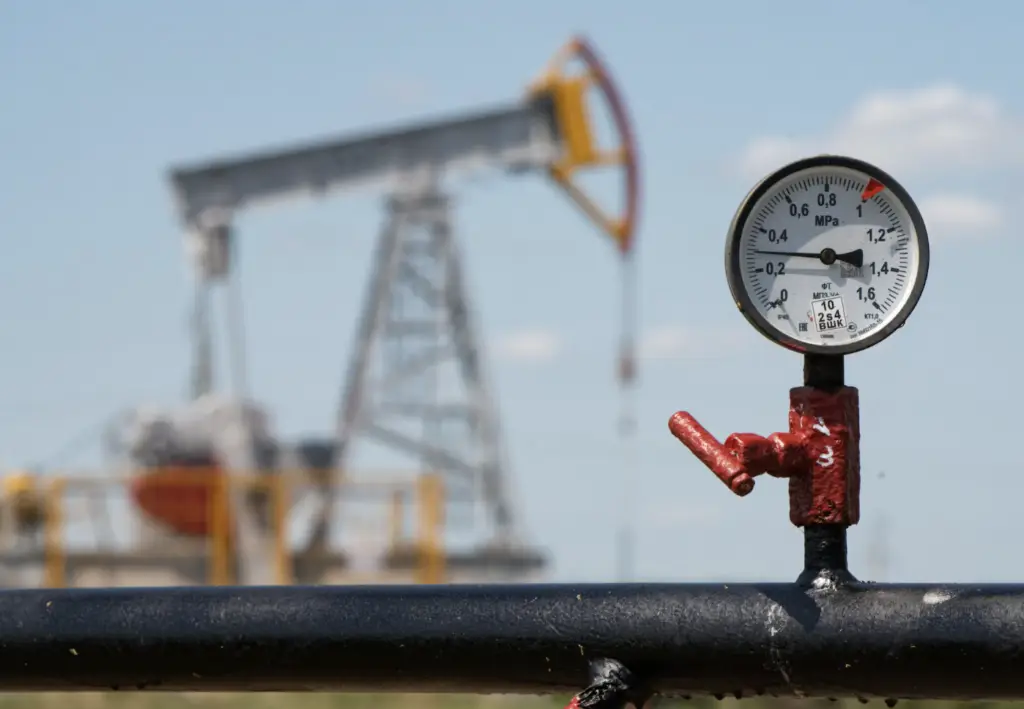
Image source: Reuters
How are higher oil prices changing consumer behavior?
Rising fuel costs are already influencing household spending decisions.
Recent data from the Bureau of Labor Statistics shows that energy typically accounts for around 7–8% of the Consumer Price Index (CPI) basket, making it one of the most volatile and visible components of household expenditure.
When evaluating consumption trends, we observed that higher gasoline prices:
- Reduce discretionary income available for non-essential spending
- Shift demand toward lower-cost goods and services
- Increase price sensitivity across income groups
This dynamic is particularly visible in sectors such as retail, travel, and entertainment, where spending is highly elastic. The result is a gradual deceleration in consumption-driven growth, which remains a core pillar of the U.S. economy.
Do energy companies offset the economic damage?
Higher oil prices create sectoral winners but not enough to neutralize broader losses.
In our analysis:
- Energy producers benefit from increased revenues and improved margins
- Capital expenditure in oil and gas infrastructure tends to rise
- Employment in energy-producing regions may improve
However, these gains are unevenly distributed. Most sectors including services, transportation, and manufacturing—face rising input costs that compress margins.
This creates a net drag on aggregate economic activity, even as the energy sector experiences localized expansion.
What does this mean for inflation and the Federal Reserve?
The key issue is how oil-driven inflation feeds into monetary policy decisions.
According to the Federal Reserve, inflation targeting remains anchored around 2%, with policy decisions guided by its dual mandate of price stability and maximum employment.
In our evaluation:
- Rising oil prices increase headline inflation directly
- Secondary effects may push core inflation higher if cost pass-through persists
- Inflation expectations can become less stable if energy prices remain elevated
This places the Federal Reserve in a constrained position balancing inflation control against the risk of slowing economic growth.
Will the Federal Reserve raise interest rates because of oil?
Not immediately but the probability increases if elevated prices persist.
When evaluating historical policy responses, we observed that the Federal Reserve typically reacts to sustained inflation trends, rather than short-term commodity spikes.
Key considerations include:
- Duration of oil prices near or above $100
- Degree of pass-through into core inflation
- Strength of labor market conditions and consumer demand
Some economists estimate that oil would likely need to move toward the $130–$150 range or remain persistently elevated to trigger more aggressive monetary tightening.
What are the biggest risks if oil stays near $100?
Sustained high energy prices create compounding macroeconomic pressure.
We observed that the primary risks include:
- Persistent inflation eroding household purchasing power
- Slower GDP growth driven by weaker consumption
- Margin compression across multiple industries
- Increased volatility across financial markets
These factors are interconnected, meaning prolonged high oil prices can shift the economy toward a lower-growth, higher-inflation regime.
Economic Transmission of $100 Oil
| Channel | Immediate Impact | Medium-Term Risk |
|---|---|---|
| Consumer Spending | Reduced discretionary income | Slower retail and services growth |
| Business Costs | Higher transport and input costs | Margin compression |
| Inflation | Increase in headline CPI | Persistent inflation risk |
| Fed Policy | Cautious stance | Potential delayed tightening |
| Energy Sector | Revenue and investment growth | Uneven economic benefits |
Is there a bullish interpretation of high oil prices?
Not all analysts view higher oil prices purely as a negative signal.
Some market participants argue that elevated prices may also reflect resilient global demand, particularly in emerging markets and industrial activity. In this view, oil strength can coexist with economic expansion, at least in the short term.
However, from a macro perspective, sustained high prices tend to weigh more heavily on consumption than they support growth, especially in advanced economies.
Is $100 oil a temporary shock or a structural risk?
The answer depends on duration not just price level.
In our analysis, a short-term move toward $100 represents a temporary headwind, while sustained prices at or above this level create structural economic pressure.
For investors and policymakers:
- Focus on inflation persistence rather than spot oil prices
- Monitor consumer spending trends for early signs of slowdown
- Expect continued uncertainty in monetary policy direction
The key conclusion is clear: the real risk is not the spike itself, but the persistence of elevated energy prices, which ultimately determines the depth and duration of their impact on the U.S. economy.