
Author
AI

Global AI Governance Tightens as Regulation Catches Up in 2026

AI Governance Becomes a Defining Global Issue In 2026, artificial intelligence governance has moved from abstract debate to concrete policy action across major economies. Governments increasingly recognize that unchecked AI deployment carries economic, social, and security risks that demand coordinated oversight. As a result, regulation has become a defining feature of the global AI landscape.


Read More...
Economics

China’s Economic Reset Redefines Political Priorities in 2026

China Enters 2026 Facing a Different Economic Reality As 2026 begins, China finds itself navigating an economic environment markedly different from the high-growth decades that defined its rise. Expansion continues, but at a slower and more uneven pace, challenging assumptions that rapid growth alone can sustain political legitimacy. Policymakers now confront a complex mix of

Read More...
Tech

Technology Enters a New Phase as Innovation Meets Global Constraints

Technology Innovation Slows but Becomes More Strategic Technology innovation in early 2026 continues advancing, but at a noticeably more deliberate pace. After years of rapid expansion, companies and governments now emphasize durability, security, and long-term value over speed. This shift reflects mounting constraints around energy availability, regulation, and skilled labor. Analysts describe the moment as

Read More...
Economics

Global Power Rivalries Deepen as US, Russia, and China Reposition

Strategic Competition Shapes Early 2026 Politics The opening months of 2026 have underscored how deeply strategic competition now defines global politics. Relations between the United States, Russia, and China continue evolving within a landscape marked by mistrust, economic pressure, and security concerns. Rather than isolated disputes, tensions increasingly reflect systemic rivalry. Analysts describe the current

Read More...
AI

Global AI Race Accelerates as Governments and Markets Recalibrate

Artificial Intelligence Becomes a Global Strategic Priority Artificial intelligence has entered 2026 as one of the most strategically important technologies worldwide. Governments increasingly frame AI as essential to economic competitiveness, national security, and long-term productivity growth. Public funding commitments and private investment continue rising despite broader economic uncertainty. Policymakers now treat AI infrastructure similarly to

Read More...
Business

U.S. Consumer Spending Slows as Credit Replaces Confidence in Early 2026

Spending Continues, but the Mood Has Shifted U.S. consumers entered 2026 still spending, but with a noticeably different posture than in prior years. Retail sales remain positive, travel demand has not collapsed, and services spending continues to support headline growth. Beneath the surface, however, confidence has weakened. Households are increasingly spending out of necessity rather

Read More...
Economics

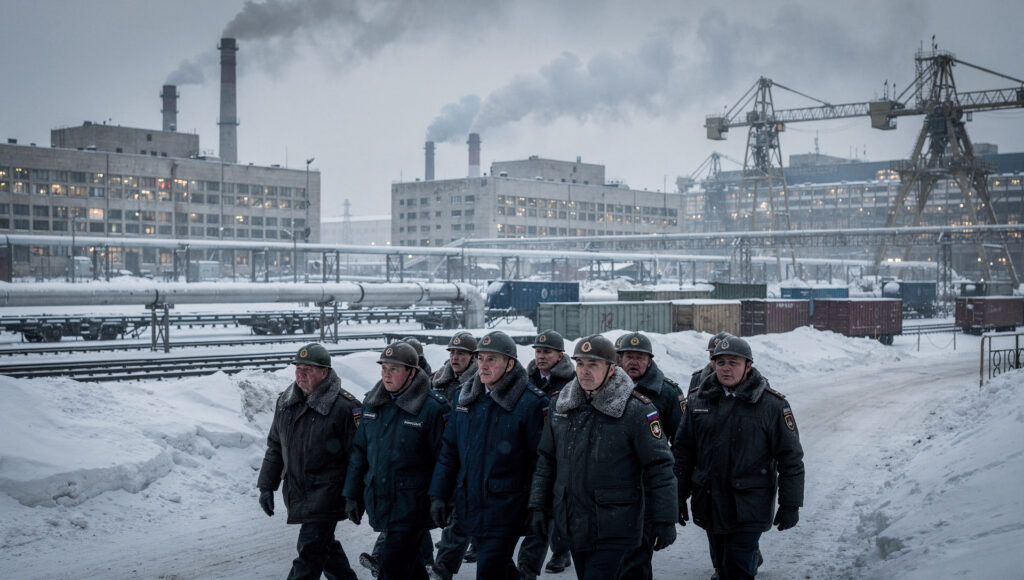
Russia Locks In Wartime Economy as Temporary Controls Become Permanent Policy

Wartime Measures Become the New Economic Baseline Russia entered 2026 no longer treating its war-driven economic controls as temporary. What began as emergency stabilization measures following the invasion of Ukraine have now hardened into long-term policy architecture. Budget frameworks, industrial output targets, and labor allocation are Russia’s economic model, signaling that the government expects prolonged

Read More...
AI

AI Adoption Slows in Regulated Industries Despite Strong Investment

Investment Momentum Remains Strong Artificial intelligence investment continued to expand rapidly entering 2026, with companies allocating record budgets toward automation, data platforms, and advanced analytics. From large banks to healthcare systems and energy utilities, executives broadly agree that AI will be central to long-term competitiveness. However, strong investment has not translated into equally strong adoption

Read More...
Business

U.S. Small Businesses Face a Silent Credit Squeeze in Early 2026

Spending Continues, but the Foundation Is Shifting At first glance, U.S. consumer spending in early 2026 appears resilient. Retail sales remain positive, travel demand has not collapsed, and service-sector activity continues to support growth. Yet beneath these headline figures, the structure of consumer behavior is changing in ways that raise concern. Rather than spending driven

Read More...
Economics

Russia Institutionalizes Wartime Economy as Emergency Measures Become Permanent

Emergency Economic Controls Become Permanent Policy Russia’s economic model in 2026 no longer resembles a temporary response to conflict. What began as emergency controls following the invasion of Ukraine have hardened into a permanent governing framework. Fiscal policy, industrial planning, and labor allocation are now explicitly structured around sustaining a long-term war economy rather than

Read More...